Showing posts with label Martin Edmond. Show all posts

Friday

Histories of the Future (2015)


Jack Ross, ed.: Poetry NZ Yearbook 2 [Issue #50] (November 2015)

Books and Magazines in brief:

Martin Edmond & Maggie Hall. Histories of the Future. ISBN 978-1-877010-67-5. North Hobart, Tasmania: Walleah Press, 2015. RRP $AUS 20. iv + 100 pp.


I guess the fact that there’s a blurb quote from me on the back cover gives a clue that I’ve already had a certain amount to say about this book. There are some wonderful essays / prose poems in here. The opening piece, “Second Hand Life” with its evocation that older Auckland Martin Edmond calls “Rain City” will stay in my mind forever, I think: especially the parenthetical account of Charles Frances, long-forgotten 1960s New Zealand novelist, author of Johnny Rapana, Ask the River and other books – who but Martin would know about him, or his apparent foreseeing of the Crewe murders? “What Instruments We Have Agree,” about the death of his mother Lauris Edmond (never named, but clearly evoked), is almost unbearably moving. And Maggie Hall’s photographs are far more than illustrations: they have their own narratives and intertwinings, the purity of image surviving even grainy newsprint reproduction: benefitting from it, in fact, perhaps.


(26-30/10/15)

Poetry New Zealand Yearbook 2 [Issue #50]. ISSN 0114-5770 (2014): 271.

[179 wds]


Poetry NZ Yearbook 2 (2015)


•


Thursday

Edmond & Hall, Histories of the Future (2015)


Edmond, Martin, & Maggie Hall. Histories of the Future. Words by Martin Edmond. Images by Maggie Hall. North Hobart, Tasmania: Walleah Press, 2015.


Blurb:
Martin Edmond is the closest thing we have to an Australasian Jorge Luis Borges and this book is a kind of Aleph: a point from which everything in the universe can be seen simultaneously — books, dreams, pictures, memories, bric-a-brac. Every reader will confront here their own frissons of recognition. The photographs, by Maggie Hall, are perfect: sufficiently off on their own tangent to set up a counter-narrative to the prose, but tending round to the same set of atmospheres and obsessions.


(May 8, 2015)

[Available at Walleah Press: http://store.walleahpress.com.au/MARTIN-EDMOND-and-MAGGIE-HALL-Histories-of-the-Future_p_69.html (29/7/15)]

[81 wds]


•


Saturday

Travelling to the Edge of Oneself (2009)


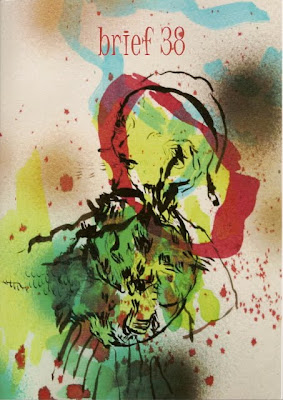
Jen Crawford, ed.: brief 38 (September 2009)

Travelling to the Edge of Oneself


Martin Edmond. The Supply Party: Ludwig Becker on the Burke and Wills Expedition. Adelaide, SA: East Street Publications, 2009. ISBN 978-1-921037-26-9. 209 pp.


Martin Edmond: The Supply Party (2009)


Outside in the rookery, an extraordinary cacophony and excitement of birds, mostly … ibis, was going on. … Ibis are elegant birds and they inevitably remind me of ancient Egypt, where the ibis-headed Thoth, inventor of writing, scribe of the gods, fount of all knowledge, recorded the confessions and affirmations of the dead on his scrolls, along with the list of who went to paradise and who was to be eaten by the gods of judgement. On the other hand, in a rookery they are scrappy, quarrelsome, raucous and somehow lacking the elegance, and often even the whiteness that they possess in their ideal form. On the wing they immediately recover their grace and splendour and then it is easy to see that they are an archaic bird, thought to have descended from that flying dinosaur, the pterodactyl. [63-64]

All that from a flock of birds!

I guess the reason this passage struck me so forcibly as I was making my way through Martin Edmond’s latest, The Supply Party, a combination travel-book, biographical-exploration of Ludwig Becker, official artist and naturalist on the ill-fated Burke and Wills expedition, was because it seems to encapsulate his method in a nutshell.

On the one hand there’s the close observation: Martin notes carefully and accurately the behaviour of the actual flock of ibis he’s observing from a nearby hide. On the other hand there’s the ever-present association of ideas: Ibis recall Thoth, the ibis-headed god, and thus we go down and interesting byway into Egyptian mythology for a short while. Finally there’s the assiduous research: Ibis, archaic birds, “thought to have descended from that flying dinosaur, the pterodactyl.”

I guess there are dangers to this approach. If you like constant mythological and historical parallels to the business in hand, this is the book for you. Martin is an elegant anecdotalist and a supremely well-informed guide. His contacts with the actual people he meets along the way tend to be significantly more truncated, though.

There’s the “sullen red-headed teenage girl” serving behind the counter of a Queensland roadhouse, who looks so incredulous at the idea of anyone wanting salad with their burger [160-61]; more poignantly, there’s the bewildered young ex-veteran in the souvenir shop who says, “with feeling, as if it were a line from a song: I’ll never wear green again” [130]; then there’s the woman in the hotel in Menindee, Noeline, who replies to his request for a room, “Sure you don’t mean the motel across the road?” [94]; there’s even that crooked-toothed drinker in the bar who dials a wrong number “very slowly, looking at his bit of paper, looking at the numbers on the phone, punching a button, looking back at his bit of paper,” as if he couldn’t read, only to hang his head in shame and shamble away when he realised “re-dialling was beyond him” [98]. Most striking of all, perhaps, there’s the well-dressed Aboriginal woman in Cunnamulla to whom Martin never succeeds in speaking at all: “We were only a metre or two apart but the space between us was vast and unknown, perhaps unknowable. I couldn’t catch her eye” [183].

Again and again Martin reveals that he’s happier sitting on the porch with a book than chatting inconsequentially with the locals: “Next door was a low, old dining room with spider-haunted mud-brick walls. I peered briefly in but it seemed better to eat outside.” [161] He even jokes about it once or twice:
It never stops, he said, humorously. It just never bloody stops, does it?
No, I agreed, without the slightest idea of what he was talking about. Walking back into the hotel compound, I realised I must have entered the Laconic Zone. [69]

His true feelings seem to me to come out more straightforwardly (laconically?) later on: “It’s a peculiarity of outback towns, that, as soon as you leave them, it is as if they have never been.” [105]

So why go there at all? What is there in this curious car-journey approximately in his tracks that succeeds in bringing Martin closer to his elusive subject, Ludwig Becker?

Again and again Martin stresses the accuracy of Becker’s observations, the fact that one can identify places, flora and fauna, people even, from his precise and elegant sketches and finished watercolours (the one exception, the tick he discovered in the arm-pit of a gecko at Minindie, remains unknown to science because, although he used a magnifying glass “to make the enlarged version .. the magnification was not sufficient to allow him to detail those features that would allow a specific identification to be made. He was working … at the limits of vision.” [177]).

And yet, there something more to Becker’s art – something hard to put one’s finger on, but nevertheless palpably there behind his apparently so-dispassionate technique: “ a vastness that is beyond mere possession by the eye” [179]. Thus his painting of a comet is hard to see except as a nativity scene, the crouching camels in the immeasurable night; his views of distant plains, too, have a tendency to play strange tricks with perception and scale. An air of the Romantic movement, of Coleridge’s “habituation to the VAST,” of the visionary landscapes of Kasper David Friedrich (his Art teacher’s teacher), seems inextricably bound up with Becker’s concept of himself as a man of science.

Might the same be said of Martin Edmond, his biographer, his shadow? Certainly. Unquestionably. There’s the lovely passage where Martin speculates that the creatures in the Australian bush, “from their long association with humans, somehow miss us when we’re not around and celebrate if we return, even if only for a night or two:”
I know this is an impossibly romantic position to take and probably untenable. I only mention it because I’ve never quite been able to shake the feeling that it is so. [134].

Novalis could hardly have expressed more succinctly his own sense of the living, breathing cosmos that we all inhabit – in mutual brotherhood or enmity.

Martin’s is a strangely melancholy book. But then, perhaps that’s not so strange. It is, after all, a funeral elegy for a man who died on a futile, mismanaged quest for something that hardly mattered in itself – Victoria’s attempt to claim as much northern territory as possible before the pushy young State of South Australia could do the same. And the gloom associated with this waste of men and materials hangs over the story more and more:
I wasn’t sure if I wanted to stand before another grave. I though perhaps I’d had enough of mortuary emotions. [148]

In the end, in fact, Martin fails even to find his ostensible subject’s final resting-place:
Having come so far, with the goal in sight, why would I turn away now? Did I not want to stand at the grave site after all? Perhaps, although I didn’t think this at the time, I was trying to align myself with all the other non-events: Burke and Wills never saw the sea at Carpentaria .. Wright never reached Cooper’s Creek with the supply party, Brahe wasn’t there when those he’d waited four months for finally came back …. Even Becker was absent from his own death. [167]

A rationalisation? Or the simple truth? Standing by Becker’s grave was never going to bring Martin the closure that he needed, the definition and the distance to evaluate his own quest. On the one hand, clearly, it was an attempt to understand Becker by emulating him. The Supply Party, then, becomes the rhetorical equivalent of Becker’s own sketchbook of the expedition: partial, unfinished, ostensibly compiled for the purposes of advancing knowledge, but actually full of mystical insights and visionary depth.

Martin’s, too, is a vision-quest, conducted under the aegis of totem animals: ibis, snakes, eagles – even the ubiquitous, omnipresent flies – and it seems designed more to tell him about himself than to provide us with a biography of Ludwig Becker. His account of Becker’s last days casts, significantly, the artist as Don Quixote, his exasperated doppelgänger Beckler as a kind of Sancho Panza, reluctantly tending to his companion’s needs whilst backbiting him under his breath:
Propping up his bloated body on some old camel bags, he [Becker] sought to make himself independent of all external influences by studying, writing and sketching [175].

Beckler’s bluntly-expressed scorn for his older countryman Becker’s scholarly preoccupations in the midst of such extreme adversity and want prompts Martin to dissent – to see, on the contrary, in this mantra, studying, writing and sketching, a kind of panacea for the woes of the world.

Which of them was right? Who can say, even at this distance in time? It would be naïve to claim that Martin doesn’t see the justice in Beckler’s workaday view of the world. He did, after all, survive to tell the tale, unlike his more spiritual companion. The Supply Party, then, might be seen as Martin’s own personal Pilgrim’s Progress – equivocal where Bunyan is most direct, but every bit as serious in the final analysis. Or, if you prefer, it might be possible to see in that splendid, luminous apotheosis of the dying Becker succeeding in making himself “independent of all external influences by studying, writing and sketching” something of the luminous yet simple practicality of Voltaire’s advice (in Candide) to “cultivate your garden.”

Either way this is an intensely thought-provoking book, one which doesn’t reveal all it’s got to say on the surface, but one which richly repays perseverance. A simple travel narrative it’s not – but then, which of the great travel books can claim to be simple?

On one level, then, it’s a kind of love-letter to the Australian landscape to match Martin’s earlier evocations of New Zealand’s central plateau in Waimarino County & Other Excursions (2007); on another, it’s a splendid addition to Burke-&-Willsiana along the lines of his contribution to the Ern Malley mythos in White City and its associated works. Finally, though, it’s its own book: an account of travelling to the edge of oneself, and a partial inventory of what can be brought back from the journey.


(4-10/6/09)

brief 38 (2009): 89-93.

[1711 wds]

brief 38 (2009)


•


Thursday

Martin Edmond, The Evolution of Mirrors (2008)


lulu.com

The Evolution of Mirrors

By Martin Edmond
Publisher: Otoliths
Copyright: © 2008 Martin Edmond Standard Copyright License
Language: English
Country: Paperback book
Printed: 108 pages, 15.24 cm x 22.86 cm, perfect binding, black and white interior ink
Price: $14.75
Ships in 3-5 business days


Martin Edmond: The Evolution of Mirrors (2008)


Description:
“To dance we need those three original muses: memory, voice, occasion ...” Martin Edmond begins his new book of prose meditations, The Evolution of Mirrors with an account of the evolution of the Muses, the daughters of Memory. As his own memory moves from Ohakune to Alexandria, Sydney to San Francisco, we are invited to look into a series of mirrors trained upon the past. “We remember in order to write but we write to forget,” he quotes himself. At times his lapidary prose echoes Borges, elsewhere he appears to be channelling Pessoa. Whatever he writes, though, he remains one of the true originals of our epoch, a stunningly inventive writer whose prose is as haunting as any poem, whose poetry is as circumstantial as Thucydides. As memory folds into memory, mirror into mirror, something starts to come into focus, some justification for our – perhaps quixotic – belief that “across all versions there is something incontrovertible, a substratum of truth.”


(July 30, 2008)

[Available at Lulu Website: http://www.lulu.com/content/3372034 (30/7/08)]

[203 wds]


•


Sunday

At the Revival Meeting (2007)


Jack Ross, ed.: Landfall 214 (November 2007)

At the Revival Meeting


Martin Edmond, Waimarino County and Other Excursions. Auckland: AUP, 2007. ISBN 978 1 86940 391, 240 pages, RRP $40.


Martin Edmond: Waimarino County (2007)


I first met Martin Edmond in Devonport, on the night of Alan Brunton’s memorial concert in December 2002. A group of us were booked to do a cabaret-style performance at a café as part of the Massey Gothic Conference (also on that weekend). We were planning to speed on over the bridge afterwards to catch the dying minutes of the concert. As it turned out, the venue we’d been booked to perform in had – quite unexpectedly – gone out of business, so we ended up being able to attend the whole of that baroque, extraordinary, farewell celebration.

From the moment we met, I felt as if I’d known Martin for years. It’s true that we’d been corresponding for a while – over his contributions to brief magazine, which I was then editing, and also various matters to do with Brunton’s Bumper Books, the publishing arm of Red Mole. Meeting people you feel you know through letters is not always entirely satisfactory, though. All sorts of things you hardly notice on paper can suddenly rear up when print converts to flesh.

Which is a rather roundabout way of saying that we got on well, and have continued to get on well. What’s more, the manner of our meeting was a characteristic serendipity. I’ve never had a conversation with Martin Edmond which hasn’t involved him filling me in on some piece of arcane lore about a little-known writer, or place, or iconic event.

In one sense, then, I’m the ideal reader for Martin’s collection of essays, Waimarino County & Other Excursions. Leafing through it is a lot like the experience of meeting the man himself. Witty, urbane, well-informed – but not in the distant, old-world way that those words would appear to imply. No, Martin’s writing never eschews emotional involvement with the matters he is describing. There’s hardly an essay here which sounds as if it was constructed to order. The subject matter is always close to his heart.

I guess, for me, the most striking example is “The Hallelujah Chorus.” At the centre of this essay there’s a terrifying account of his visit to a revival meeting:
And as these sinners declared themselves, the chanting in the theatre rose in pitch and fervour and intensity until there came above the thunderous chorus a weird, high ululation from the stalls on the front left-hand side. I had never heard people speaking in tongues before. Glossolalia sounds like someone yodelling so hard their uvula goes into spasm. It reminded me of a time I heard a flock of sheep mustering at dusk on a Lands and Survey block out the back of Stratford ... [20]

I was there! Not at that particular meeting, of course, but many similar ones (Billy Graham, the Church of Christ, the Assembly of God). The only difference is that I would have been part of that flock yodelling strangely as the spirit of Pentecost came down on us …
Praise the Lord the Holy Ghost has descended upon us in Tongues of Flame! the Preacher screeched above the clamour of the Believers, doubling and redoubling their efforts. Then he began to call particular people out of the crowd. Suddenly I heard him say: There is a young man of sixteen or seventeen years (I had just turned seventeen) and he is sitting on the right-hand side of the cinema (I was) two thirds of the way towards the back (exactly!) and be is wondering whether to come forward now and give his soul to Jesus (I wasn’t, but, hell …). Let us all now raise our voices to the heavens and ask the Lord to give strength to this young man so that be may come and join us...

That’s precisely it. He’s put his finger on the mastery of it, the curious effectiveness of those techniques of mass persuasion. How many times have I sat fidgeting in the middle row, sure that I was the one who was being singled out for attention, sure that this was it, that tonight was the only chance I would ever have to escape perdition?

And I did feel a powerful force calling me. I was young and uncertain and the exorcism of possible demons from the chaos of my awakening mind did for a moment seem desirable, even seductive. Surely there was no harm in it? It was certainly impressive to see old people getting out of their wheelchairs and tottering forward to lean on the edge of the stage.

An opportune bit of squabbling saves Martin in the nick of time – “Any chance I would go forward to be saved blew away in that poor kid’s outraged, helpless sobbing” [21]. What impresses me, though, is that he is prepared to admit that the opportunity was there, that he might have given in.

Mind you, I doubt it would have taken. Martin Edmond was born to be a flâneur, a Baudelairean dandy exploring the byways of the metropolis (whether it be Auckland, Wellington or Sydney). There’s another part of him that is in deadly earnest, though. The strength of his writing is that he is able to give equal weight to both sides.

Richard Ellmann’s biography of Oscar Wilde named the two warring impulses within his hero after the two dominant intellectual influences of that time, the late nineteenth century: on the one hand, the amoral aestheticism of Walter Pater, on the other, the moral earnestness of John Ruskin. In Martin’s case I’d be tempted to call the two Ohakune and Alan Brunton.

Does that sound frivolous? It isn’t meant to. The Martin Edmond of Autobiography of My Father, of the childhood portions of Chronicle of the Unsung, of the “Autobiographies” section of the book we’re examining here, is a man profoundly, wistfully in love with his own past – with the complex intensities of youth and adolescence in that little town on the Grand Trunk Line. He’s the poet of that region, in fact – more alert to its contradictions and diversities even than that near neighbour of his, the Gothic novelist Ronald Hugh Morriesson.

And yet there’s also the Martin who ran away – almost literally – to join the circus, who followed the mercurial Alan Brunton on tour with Red Mole, abandoning the academic gravy train of Victoria University to do so. This is the Martin who writes so lovingly about Cavafy and Pessoa, who understands the attraction of that shifting signifier of international modernism, the heteronym.

Why are Martin’s books so challenging in form? Why does he resist easy genre identification, that secure place in the bookshop racks? It’s cost him, that’s for sure. Anyone straddling the uneasy frontiers of fiction and non-fiction, whose work might equally well be shelved under autobiography, travel writing or cultural commentary is liable to the suspicion of lazy readers. Praise, yes – there’s been a lot of praise of the originality of Martin’s work, but it’s usually (paradoxically) coupled with the name of some other writer whose example he is implied to be imitating: W. G. Sebald is the most obvious example, but recently Thomas de Quincey has been cited as a strong precedent (this despite the fact that Martin assures me that he has only the most tangential familiarity even with the original Opium Eater essays).

It’s hard for me to imagine any reader not finding something to their liking in the four sections of this book: ‘Autobiographies’; ‘Meditations’ (on subjects ranging from the Rosetta Stone to Alan Brunton); ‘Illusions’ (prose poems and dreams, mostly from his online blog); and ‘Voices’, published previously under the title Ghost Who Writes in Lloyd Jones’s excellent little Montana essay Series. Nor do I think I’m unique in finding virtually all of it to my liking. In fact, I can’t think of a book which has beguiled me as much since I first picked up Borges’ Labyrinths when I was a teenager.

The idea of the blog, the online diary, is another important component of Martin’s collection. He began (as I understand it) with the idea of starting a new blog for each new book project, but they appear to have evolved into a more complex symmetry.

There’s Luca Antara (“... who knows what other travellers might not have set out with a wild surmise for these shores? Looking perhaps for Luca Antara; perhaps just for the day after tomorrow”), described as being the work of a “schizoid antipodean.” That one has been running since 2004.

Then there’s dérives (started in 2005), which began with prose poems and reflections, but has now settled down to a portrait of the seedier side of cab driving in Sydney.

White City (begun in 2006), now a compendium of dreams and dream essays, was presumably intended to accompany Martin’s Ern Malley memoir / novel (accessible, so far, only in extracts such as the one included in this issue of Landfall).

No doubt Martin foresees a date at which he can move over to the new blog, Fetchers (started in July 2007) At present it’s confined to the single optimistic statement: “It’s a happy day today,” but there’s no doubt a lot more to come.

Raw material for the books? Undoubtedly. But the mere fact of being able to make your random jottings available online within minutes of writing them has an inevitable influence of the nature of that writing. It’s hard to see how writers can continue to ignore the possibilities of instantaneous communication – the barrage of comments and cross-references possible through hypertext.

In the present case, it’s fascinating to see how they’ve stolen into the texture of Martin’s book, along with more considered pieces from the nzepc, brief, and various other anthologies and projects, to give us the closest thing to an anatomy of the life of a twenty-first century writer I can readily imagine.

So I guess the reason I’d really advise to buy this book is not simply as an entry pass to the world of Martin Edmond, but also as a cartography of where we are, right now, at the bottom of the world, in the complex of world culture.


(13-17/8/07)

Landfall 214 (2007): 187-90.

[1703 wds]

Landfall 214 (2007)


•