Showing posts with label NZ Poetry Shelf. Show all posts

Friday

Riemke Ensing Tribute (2026)


NZ Poetry Shelf

Paula Green:
Poetry Shelf pays tribute:
Riemke Ensing (1939 – 2026)

Love Affair

A given poem from Katherine Mansfield


You wrote the table
was laid
for two
but nobody came
so you dined opposite
a white napkin.

It’s called giving yourself
to life.
Through the window
a quiet branch
has the evening
to itself
also.

- Riemke Ensing
from Classic NZ Poets in Performance (2006)

“Jack, you’ve got so fat!” True, perhaps, but not exactly tactful. But then, Riemke’s sense of humour tended to prevail over the Kiwi convention of backbiting people in private rather than to their faces. I have to respect her for that. I felt, too, that keeping things jokey was her way of combatting a certain turn towards melancholy. It’s all there in the poems. Poetry was a necessity, not a luxury, for Riemke. How else could she make sense of her life in this strange country at the bottom of the world, with these people whose monosyllabic utterances were so difficult to fathom? I remember at the launch of Classic New Zealand Poets in Performance, Riemke came upon my parents and me sitting out in the corridor, munching on sandwiches, because my Mum was sure that my Dad would get irritable if he didn’t get his dinner on time. She laughed out loud at how absurd we looked. Then she accepted the offer of a sandwich and sat down with us to polish it off. That was Riemke: vital, outrageous, but also, in the final analysis, quite practical – as well (of course) as fiercely intelligent. She scared me, but I’ll miss her anyway.


(14/8/26)

'Poetry Shelf pays tribute: Riemke Ensing (1939 – 2026).' Ed. Paula Green.
NZ Poetry Shelf: a poetry page with reviews, interviews, and other things.
[Available at: https://nzpoetryshelf.com/2026/09/04/poetry-shelf-pays-tribute-riemke-ensing-1939-1926/] (4/9/26)

[203 wds]


Poetry Box: Paula Green


Saturday

Therese Lloyd: In Levin (2024)


NZ Poetry Shelf

Poetry Shelf on Poems:
Jack Ross on 'In Levin' by Therese Lloyd


Therese Lloyd: Other Animals (2013)


Therese Lloyd:

In Levin


Needlepoint rain
is static against the pines
running alongside
this endless beach
that stretches further to my left
and then to my right
With no way to turn
I must stand very still

There is detritus all around:
a motorbike’s green rusted petrol tank,
a bright pink single mattress
half buried in the sand
blue and white
ice-cream containers
scattered like impossible stepping stones

There is theme music too:
fantails’ song and the whoops and cries
of men playing cricket
A fallen pine gathers seaweed
and plastic bags in its rib-cage
A man riding a horse talks on a cell phone

The rate of teenage suicide
is at its highest ever
The local kids drag race
their souped-up Ford Escorts
leaving thick black stripes
that come to abrupt endings


[“In Levin” © Therese Lloyd, Other Animals (Wellington: VUP, 2013): 23 (reprinted by permission).]


It’s a strange experience to live with a poem for almost two decades. I must have read this one first in 2007 or so. It came in as a submission for an issue of Landfall I’d been asked to edit, and I could see at once that it had to go in.

Why? Because it stopped me dead in my tracks.
With no way to turn
I must stand very still
And why must this speaker stand so very still? Because they have nowhere to turn to, that’s why. There’s so much activity going on all around – cricket, cell phones, motorbikes – and yet they’re stopped still by something, something unnamed: just the sheer extent of the vista, perhaps; or by something else, off the edge of the screen.

A bit later on, I needed some poems for a class anthology I was editing. It was for Stage One Creative Writing students at Massey University, and I’d broken down the “poetry” section into a series of weekly themes. Therese Lloyd’s poem came in under “Figures of Speech.”

That may sound a bit reductionist, but I was very struck by the way she’d folded so many strategic metaphors and similes into this otherwise seemingly photo-realist description of a local scene:
  • “Needlepoint rain” – with the implication of embroidery (of course), but also of a certain stabbiness in the narrator.
  • “ice-cream containers / scattered like impossible stepping stones” – it’s that extra word “impossible” which (I feel) conveys the sense of futility, tragic waste which pervades the poem.
  • “A fallen pine gathers seaweed / and plastic bags in its rib-cage” – that’s a personification, rather than a metaphor, if you want to be pedantic (and I usually do). It projects the fallen pine as an animate being with a ribcage – which, after all, is what it is. The poem as a whole is full of a sense of animism: of things which seem at least as alive as people.

I don’t recall any Levin patriots protesting at the picture Lloyd painted of the place. I think it had just come top of some nationwide poll of youth suicide rates at the time, but it’s really the coast to the west of town which is the setting – a postcard-perfect Kiwi beach setting.

I called the picture it paints “photo-realist” above, but perhaps a better term would be “hyperreal.” It has the air of a place that you see with exceptional vividness because you’ve just had a terrible shock of some kind. I don’t know what that shock could be, but those last lines about the “souped-up Ford Escorts”
leaving thick black stripes
that come to abrupt endings
might give us some sort of clue.

This is a poem to read when you need to be reminded of the intensity, the momentousness of the things all around you. Fantails, logs, raindrops all live side by side with more human relics in Lloyd’s vision: the mattresses, ice-cream containers, petrol-tanks we leave behind us.

You can ride on by on your horse if you need to, wheeling and dealing on your phone, but if you’re prepared to invest in the world of “In Levin”, you have to stop, look around, and try and see all there is to see.


Jack Ross is the author of six poetry collections, four novels, and four books of short fiction. His latest book of short stories, Haunts, is due out from Lasavia Publishing later this year. He lives with his wife, crafter and art-writer Bronwyn Lloyd, on Auckland’s North Shore, and blogs at http://mairangibay.blogspot.com/.

Therese Lloyd lives in Wellington and grew up in Christchurch and Napier. She is the author of two collections of poetry, Other Animals (VUP 2013), and The Facts (VUP 2018) which was shortlisted for the Ockham Book Awards in 2019.


Matt Bialostocki: Therese Lloyd (Unity Books, 2013)


(28/4-13/5/24)

'Poetry Shelf on Poems: Jack Ross on ‘In Levin’ by Therese Lloyd.' Ed. Paula Green. NZ Poetry Shelf: a poetry page with reviews, interviews, and other things.
[Available at: https://nzpoetryshelf.com/2024/05/23/poetry-shelf-on-poems-jack-ross-on-in-levin-by-therese-lloyd/ (23/5/24)]

[539 wds]


Poetry Box: Paula Green


Sunday

A Clearer View of the Hinterland (2023)


NZ Poetry Shelf

Poetry Shelf Favourite Poems:
A Clearer View of the Hinterland


Jack Ross: Leicester Kyle (2000)


A Clearer View of the Hinterland
Leicester at Millerton


Absence of rapids on Ngakawau stream.
Big Ditch and Little Ditch Creek – impious hand bisects the ‘D.’
Cobweb of raindrops in dragon sun.
“Down, down, down from the high Sierras ...”
Electrical storms: intensity of affect.
Fund-raising at the Fire Depot.
Grey & white kitten, black robin, and black fantail.
Huffing into an Atlas stove.
“If you can see the hills, it’s going to rain.”
Jack said: “A succession of inner landscapes.”
Kiwi peck through sphagnum moss.
Leicester said: “A community devoted to male play.”
Millerton speaks – A Cannabis Landslide.
Nature tips – gorse is choked by bush.
Other landrovers get one wave.
Proud grey donkey; manure in a sack.
Quarrelling over the Fire Service.
“Rain has a persistency of grades, much noted by the locals.”
Siren: “I’m always free on Wednesday nights.”
Twin side-logs set for smoke-alarms.
Utopia St, Calliope Rd.
Village hall stained with camouflage paint.
White-packaged videos, too frank a stare.
X of three rocks marks one rare tussock.
“You have to say: Great! Awesome! Choice!”
668 – Neighbour of the Beast.


[7-10/7/98]


As a kid, I spent a good deal of time poring over the works of Edward Lear. I did like the limericks, but it was his illustrated alphabet poems that really tickled my fancy. This was my first – and to date only – attempt to compose one myself.

It records a visit I made in 1998, some 25 years ago now, to my friend the Rev. Leicester Kyle, who was living at the time in Millerton, a small bush-clad town on the West Coast of the South Island. Millerton is quite a mysterious place (or it was then) – very much off the grid. It was, however, the rather deadpan commentary on its inhabitants and traditions delivered by Leicester as we navigated its narrow roads in his bright red Land Rover which was the real prize for me.

I found myself jotting down some of his more quotable comments and thoughts, along with a few of my own observations, and ended up grouping them in this way to reduce the information overload I felt overtaking me at times.

Leicester himself was a fascinating character. He started off as a botanist, was then ordained as an Anglican priest, only to convert in his late fifties to a new faith: poetry. After his death in 2006, my friend David Howard and I collaborated on an online edition of his collected works which can still be consulted here.

The poem first appeared in a small magazine called Spin [#36 (2000): 51], which I was co-editing at the time. It was described in a review of the issue as “languid and oddly themed,” a tag I’ve always relished. I’ve often thought it could stand as an epitaph for most of my work.

Some ten years ago I used it as the title poem for my collection A Clearer View of the Hinterland: Poems & Sequences 1981-2014 (Wellington: HeadworX, 2014). The publisher, Mark Pirie, was kind enough to include it on his website as an incitement to purchase the book.

I still have a soft spot for it, I must admit. It brings back many memories of those times: of Leicester himself, of the wild West Coast, and the kindness of the people I met there. It makes me feel like jumping in the car right now and heading straight down to Buller and Karamea to try to locate some of the overgrown industrial sites and hidden green havens my friend revealed to me then.

I fear that it might have to be a journey through time as well as space, though. Much of the Buller Plateau has been devastated since then by strip mining.


Jack Ross’s most recent book is The Oceanic Feeling (2021). Last year he retired from his job teaching creative writing at Massey University to pursue his own writing fulltime. He lives with his wife, crafter and art-writer Bronwyn Lloyd, in sunny Mairangi Bay, and blogs at http://mairangibay.blogspot.com/.

Favourite Poems is a series where a poet picks a poem from their own backlist and writes a short note to accompany it.


(13-14/4/23)

'Poetry Shelf Favourite Poems: Jack Ross’s "A Clearer View of the Hinterland".' Ed. Paula Green. NZ Poetry Shelf: a poetry page with reviews, interviews, and other things.
[Available at: https://nzpoetryshelf.com/2023/05/03/poetry-shelf-favourite-poems-jack-rosss-a-clearer-view-of-the-hinterland/ (3/5/23)]

[624 wds]


Poetry Box: Paula Green


Wednesday

No ideas but in ... (2022)


[NZ Poetry Shelf]

Paula Green:
Poetry Shelf Paragraph Room 3: No ideas but in

No wars but in words

When I was at school, my friends and I used to have long philosophical arguments about whether or not it was possible to have a thought which wasn’t initially in words. I was a strong believer in the idea that a thought could precede the words which expressed it: that it often had to be translated – imperfectly – into words, after being conceived in musical or architectural or simply relational terms. Of course I couldn’t prove it, as our discussions were conducted entirely in words. We were also very concerned about the status of mathematics. Was it really a language? Did its axioms constitute words, or were they somehow superior to those slippery entities (as the budding scientists among us tended to argue)? Now that I’m older, my trust in words has not grown greater – but I think I love them more. In fact, “words are windows” was the first phrase that came to mind for this paragraph, until I realised it lacked a “no” and a “but”. Words are windows. They show us things. But they don’t do so clearly. And when you read – as I did in the online news today – that in Russia now you can “speculate freely and quite calmly on the prospects of nuclear war,” I’m again terrified at what treacherous little disease-laden free radicals words can be. I’d like to set against that the opening of Hemingway’s A Farewell to Arms: “I was always embarrassed by the words sacred, glorious, and sacrifice and the expression in vain … There were many words that you could not stand to hear and finally only the names of places had dignity.” That is to say, choose your words wisely, or they may blow up in your face.


(24-25/5/22)

'Poetry Shelf Paragraph Room 3: No ideas but in.' Ed. Paula Green.
NZ Poetry Shelf: a poetry page with reviews, interviews, and other things.
[Available at: https://nzpoetryshelf.com/2022/06/03/poetry-shelf-paragraph-room-3-no-ideas-but-in/ (3/6/22)]

[294 wds]


Poetry Box: Paula Green


Monday

Time in Poetry (2022)


[NZ Poetry Shelf]

Paula Green:
Poetry Shelf Paragraph Room 2

Time

I find it essential to be on time for everything (including the present assignment). If I’m invited anywhere, I count backwards to find the latest moment I can leave in order to be at my destination punctually. Occasionally I try to factor in a bit of fashionable lateness, but mostly in vain. Time in poetry, though, is a horse of a different colour. I wrote a poem while travelling in the Lake District with my family in 1981. The first two lines ran:
We built a man of slates, and after years,
revisited, the rock had grown a face.
I liked them, but I wasn’t really sure what they meant. Perhaps for that reason, what came next was less satisfactory – to me, and to others. The poem stayed with me, though, and fifteen or so years later I made a concerted attempt to complete it with some entirely new lines. And in that form it appeared in my first book, City of Strange Brunettes (1998), under the title “First Love.” But I didn’t entirely like that version either, so later on I had a go at changing the second stanza. Just now, in 2022, I had a look at the poem again and decided to change it back to the way it’d been in the book. Even as I read it, though, I can still hear the original 1981 version of the last four lines going round and round in my head. My point is not so much that the poem is still alive for me, after forty-odd years (though it is); rather, the thing that fascinates me is the number of different moments over those four decades that are somehow miraculously preserved in this one six-line poem. Writing a poem is the closest thing I’ve ever experienced to that Proustian idea of recovering lost time – not just as it was, but with the added patina of what has come in between then and now. It’s a snapshot of a buried past, but with the advantage that the people in the picture are still able to live and breathe. Going back to old poems to rewrite and reshape them is not so much about improving them as asserting their ongoing vitality – and, I suppose, my own.


(27-28/4/22)

'Poetry Shelf Paragraph Room 2.' Ed. Paula Green.
NZ Poetry Shelf: a poetry page with reviews, interviews, and other things.
[Available at: https://nzpoetryshelf.com/2022/05/06/poetry-shelf-paragraph-room-2/ (6/5/22)]

[376 wds]


Poetry Box: Paula Green


Saturday

Chocolate Weetbix (2022)


[NZ Poetry Shelf]

Paula Green:
Poetry Shelf Paragraphs: 25 Poets on Poetry

When we were kids, we had a bad habit of leaving the last couple of inches of cereal in the Weetbix package uneaten. No amount of persuasion would convince us that this unwholesome looking mess was as good as the perfectly formed biscuits we’d started off with. That is, until my father came up with the term chocolate weetbix. All of a sudden, we were competing to have a bowl of chocolate weetbix scraps rather than those boringly predictable rectangles. I’m still not sure why those two words made such a great difference to us – the mystique of chocolate transforms all it touches, I suppose. But it was more than that. It was my first experience, not so much of the power of advertising, as of the inherent magic of putting the right words in the right place. My father was a clever and eloquent man, but even he must have felt some slight disquiet at manipulating us with such ease. Since then, as a writer and a teacher, I’ve become increasingly aware of the extent to which one can transform other people’s experience of the world simply by describing it in a particular way. It’s a fearsome responsibility, and not to be taken lightly. This year, as so many of our assumptions about the society we live in crumble around us, I’m more conscious than ever of the power of poetry – ‘language charged with meaning to the utmost possible degree’ – and its ability to affect reality. We can, quite literally, change lives with our words: but what is it, exactly, we want to say?


(6-7/4/22)

'Poetry Shelf Paragraphs: 25 Poets on Poetry.' Ed. Paula Green.
NZ Poetry Shelf: a poetry page with reviews, interviews, and other things.
[Available at: https://nzpoetryshelf.com/2022/04/14/poetry-shelf-paragraphs-25-poets-on-poetry/ (14/4/22)]

[265 wds]


Poetry Box: Paula Green


Tuesday

77 Days (2021)


NZ Poetry Shelf

Poetry Shelf: Writings from lockdown
77 Days


Osip Braz: Anton Chekhov (1860-1904)


When I was at high school my Russian teacher, Mr. Meijers, told us a Chekhov story, “The Bet.”

A rich man wagers a poor one he can’t spend five years in solitary confinement without going crazy. He can ask for books, or fancy food, or anything else he wants – but he’s not allowed to talk to anyone, or go outside his room.

I do remember wondering what all the fuss was about. A few years on your own, with books and entertainment of your choice – what could be wrong with that? In fact, after that, every time I bought a book I had that in the back of my mind – being stuck in my own room under house arrest.

As the years roll by, the man in the room studies languages and learns new skills; he leaves little notes asking for more textbooks. What he isn’t told is that his host has lost most of his money, and can no longer afford to settle the bet without going bankrupt.

The rich man lives in fear of his former friend.

The night before the five years are up, the man in the room escapes through a window, leaving no note behind. Perhaps he’s found out about the loss of his friend’s fortune, and decided to let him off out of pity. Perhaps all these years of enforced confinement have finally taken their toll.

Five years is an awfully long time – a scarcely conceivable weight of days. Until now, that is.

Our present lockdown, the fourth for Tāmaki Makaurau, began at midnight on Tuesday, 17th of August. As I write, at the beginning of November, only 77 days have actually gone by. But five years adds up to – give or take a leap year or so – 1824 days!

That’s almost 24 times what we’ve had to put up with so far.

And what have I done with this time?

I boxed up my father’s remaining books and carted them across the road for a church fundraiser.

I edited a webfestchrift for my friend Michele Leggott.

I wrote some posts on my blog.

I went on a diet: I’ve lost 20 kilos so far.

Oh, and I did take the trouble to look up that story. It turns out that it isn’t five years he has to spend in the room, it’s fifteen. Not 1824 days, but 5472. Not 24, but 71 times what we’ve just been through.

No doubt we’ll soon be back to normal. It hasn’t been five years – let alone fifteen – but you can’t really call it nothing, either.


(1-3/11/21)

'Poetry Shelf: Writings from lockdown.' Ed. Paula Green.
NZ Poetry Shelf: a poetry page with reviews, interviews, and other things.
[Available at: https://nzpoetryshelf.com/2021/11/12/poetry-shelf-writings-from-lockdown/ (12/11/21)]

[431 wds]


Poetry Box: Paula Green


Friday

42 poets celebrate National Poetry Day (2018)


[NZ Poetry Shelf]

Paula Green:
42 poets celebrate National Poetry Day: A memory suite


A. E. Housman: Collected Poems (1956)


Being the youngest in a family of four tends to make you extra sensitive to snubs. My eldest brother was the brainy one, the next brother was the writer, and my sister was the arty one. So what was I?

One day my father came home with a little book of poems he’d picked up for my number-two brother (not present) in a second-hand bookshop.

“Why is everything always for him!” I screamed (was I ten, twelve at the time?). Off I ran to my room.

Later my father knocked on the door and, silently, put down the book beside my bed. It was the collected poems of A. E. Housman.

Its cover eventually came off from over-use. Housman’s poetry still moves me. It’s so simple, so right. It reminds me of my Dad.


(18/8/18)

'42 poets celebrate National Poetry Day: A memory suite.' Ed. Paula Green.
NZ Poetry Shelf: a poetry page with reviews, interviews, and other things.
[Available at: https://nzpoetryshelf.com/2018/08/24/41-poets-celebrate-national-poetry-day-a-memory-suite/ (24/8/18)]

[134 wds]


Poetry Box: Paula Green


Monday

Vanishing Points (2017)


NZ Poetry Shelf

Paula Green:
Michele Leggott’s glorious new poetry collection: a launch speech and some poems


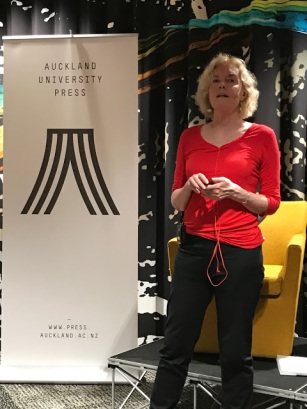
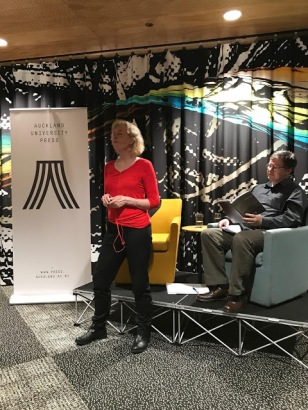
IMG_1043.jpeg  GetFileAttachment-1.jpg


2017 seems to be the year of enviable launch speeches. Gregory O’Brien did a cracking job launching James Brown’s new book; Greg had taken the poems up to Palmerston North to read before writing his speech.

Jack Ross has launched Michele Leggott’s Vanishing Points (Auckland University Press) with similar incandescent word flare. I have read the book twice so far and he is right on point: this is one special poetry collection.


The Speech

Well, needless to say, I felt very flattered when Michele Leggott asked me to launch her latest book of poems, Vanishing Points. Flattered and somewhat terrified. It’s true that I’ve been reading and collecting her work for well over 20 years, and I’ve been teaching it at Massey University for almost a decade now, but I still felt quite a weight of responsibility pressing down on my shoulders!

One thing that Michele’s poetry is not, is simple. It’s hard to take anything in it precisely at face value: what seems like (and is) a beautiful lyrical phrase may be a borrowing from an unsung local poet – a tangle of Latin names can be a reference to an obsolete star-chart with pinpricks for the various constellations.

The first time I reviewed one of her books, as far as I can see, in 1999, I ended by saying “the reading has only begun.” At the time, I suspect I was just looking for a good line to finish on, but there was a truth there I didn’t yet suspect. Certainly, I’ve been reading in that book, and all her others, ever since.

But how should we read this particular book? “Read! Just keep reading. Understanding comes of itself,” was the answer German poet Paul Celan gave to critics who called his work obscure or difficult. With that in mind, I’ve chosen two touchstones from the volume I’m sure you’re all holding in your hands, or (if not) are planning to purchase presently.

The first is a phrase from the American poet Emily Dickinson, referred to in the notes at the back of the book: “If ever you need to say something … tell it slant.” [123] The second is a quote from the great, blind Argentinian writer Jorge Luis Borges: “I made a decision. I said to myself: since I have lost the beloved world of appearances, I must create something else.” [35]

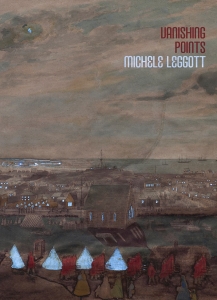
With these two phrases in mind, I’d like you to look at the cover of Michele’s book. It’s a painting of the just-landed Imperial troops, camped near New Plymouth in August 1860. The wonderful thing about it is the way the light of the campfires shines through the painting: little holes cut in the canvas designed to give the illusion of life and movement.

“War feels to me an oblique place,” wrote the reclusive New England poet Emily Dickinson to Thomas Wentworth Higginson in February 1863, at one of the darkest points of the American Civil War. Higginson, a militant Abolitionist, was the Colonel of the 1st South Carolina Volunteers, the first officially authorized black regiment in American history. He was, in short, a very important and admirable man in his own right. Perhaps it’s unfair of posterity to have largely forgotten him except as the recipient of these letters from one of America’s greatest poets.

New Zealand’s Land Wars of the 1860s may have been on a much smaller scale, but they were just as terrifying and devastating for the people of Taranaki – both Māori and Pakeha – in the early 1860s. In her sequence “The Fascicles,” Michele transforms a real distant relative into a poet in the Dickinson tradition. Just as Emily Dickinson left nearly 1800 poems behind her when she died in 1886, many collected in tidy sewn-up booklets or fascicles, so Dorcas (or Dorrie) Carrell “in Lyttelton, daughter of a soldier, wife of a gardener” [75] provides a pretext for “imagining a nineteenth-century woman writing on the outskirts of empire as bitter racial conflict erupts around her.” [123]

There’s an amazing corollary to this attempt to “Tell all the truth but tell it slant” (in Dickinson’s words). Having repurposed one of her family as a war poet, Michele was fortunate enough to discover the traces of a real poet, Emily Harris, the daughter of the Edwin Harris who painted the picture of Taranaki at war on the wall over there, whose collected works so far consist of copious letters and diaries, but also two very interesting poems. “Emily and her Sisters,” the seventh of the sequences collected here, tells certain aspects of that story.

It’s nothing but the strictest truth to say, then (as Michele does at the back of the book), that one should:
walk away from the painting when it is lit up and see how light falls into the world on this side of the picture surface. Is this what the artist meant by his cut-outs? Is this the meaning of every magic lantern slide? [124]
I despair of doing justice to the richness of this new collection of Michele’s – to my mind, her most daring and ambitious work since the NZ Book Award-winning DIA in 1994. There are eight sequences here, with a strong collective focus on the life and love-giving activities which go on alongside what Shakespeare calls in Othello “the big wars”: children, family, eating, painting, swimming. One of my favourites among them is the final sequence, “Figures in the Distance,” which offers a series of insights into the world of Michele’s guide-dog Olive – take a bow, Olive – amongst other family members, many of whom, I’m glad to see, have been able to come along here tonight.

This is a radiant, complex, yet very approachable book. It is, in its own way, I’m quite convinced, a masterpiece. We have a great poet among us. You’d be quite crazy to leave here tonight without a copy of Vanishing Points.

Jack Ross


[Jack and Michele then had a discussion on how the book came into being. I am going to do an interview with Michele so Poetry Shelf readers can also get different entry points into the collection.]


1503612399072.jpg
Michele Leggott, Vanishing Points (Auckland University Press, 2017)


(23/10/17)

Paula Green, “Michele Leggott’s glorious new poetry collection:
a launch speech and some poems.”
NZ Poetry Shelf: a poetry page with reviews, interviews and other things.
[Available at: https://nzpoetryshelf.com/2017/10/30/michele-leggotts-glorious-new-poetry-collection-a-launch-speech-and-some-poems/ (30/10/17)]

[Reprinted from: The Imaginary Museum (26/10/17)]

[992 wds]


Poetry Box: Paula Green


Friday

Poetry Shelf, Poets' Choice (2016)


[NZ Poetry Shelf]

Paula Green:
Poetry Shelf’s Annual-Books-We-Loved-in -2016 Lists


    Jen Crawford: Koel (2016)


  • Jen Crawford. Koel. Introduction by Divya Victor (Melbourne: Cordite Books, 2016).

  • Jen Crawford’s wonderful new book of poems is my first pick for 2016. Mind you, there’s been nothing simple or straightforward about Jen’s development as a poet – from the fractured narratives of Admissions or Pop Riveter to the post or trans-human thoughtscapes of her latest book. Anything can speak in a Crawford poem: a rock, a bird, a human – but does it choose to? That’s the question. Also, what might it have to say? The world can no longer be divided up neatly into natural and artificial halves in her vision: nor is it any longer talking to us or trying to instil moral lessons. Rather, it is, and the question of what it is (or might be) is a matter of pressing concern to Jen. The Koel is a bird with a particularly loud and raucous call – a little like the dredgers that inhabit the canals, half-amphibious, half-land-creatures, in the Eastern cities where so many of these poems were written in (as she tells us) a hypnagogic state between waking and sleeping. This is a book to read over and over again – to experience in many moods.


  • Christopher Ricks & Jim McCue, ed. The Poems of T. S. Eliot: The Annotated Text. 2 vols (London: Faber, 2015).

  • Ever since I first picked up The Waste Land as a teenager and fell under its spell, I’ve been wondering just how Eliot got there – and what happened to him afterwards. If any of you have similar questions then this rather monstrous version of his complete poetical works will offer you as many answers as there have been commentators on his immense, almost unprecedented eminence over modern English-language poetry. There’s a tidied-up version of the “original” Waste Land here – free of its editing by Ezra Pound. There are notes and drafts and commentaries beyond all reason and proportion. It’s either a treasure trove or a madhouse: it’s hard to decide which. I certainly wouldn’t be without it, though – and while it may not be all that easy to read through, it’s very rewarding to browse in.


    Erin McPhee: Anne Carson's Float (2016)


  • Anne Carson. Float: "A collection of twenty-two chapbooks whose order is unfixed and whose topics are various. Reading can be freefall" (New York: Alfred A. Knopf, 2016).

  • It’s quite funny to see just how mixed is the response on Amazon.com to this, Anne Carson’s latest opus. The fans are fine with it, of course: yet another example of her wide-ranging erudition and versatility of invention. The less whole-hearted complain about the difficulty of actually reading this collection of mini-chapbooks. And, to be honest, the whole thing does resemble the little sets of pamphlets one often gets issued with in offices far more than the kind of arthouse production represented by NOX or Antigonick. One guy actually said he was waiting for the hardback version (I presume there will never be a hardback version?). Needless to say (for anyone who’s ever looked into one of my own books), I’m fine with gimmicky layouts, so I’m really just looking forward to getting to grips with the wide-ranging set of Carsonian idées fixes on offer here.


  • Don W. King, ed. The Collected Poems of C. S Lewis: A Critical Edition (Kent, Ohio: The Kent State University Press, 2015).

  • I don’t quite know why I have such a soft spot for C. S. Lewis’s poetry. I was brought up on the Narnia books, then switched my allegiance to the science fiction trilogy and Till We Have Faces when I got a bit older. But why the poetry? How could the same person who enjoyed the fractured Modernist deathscapes of Eliot and Pound enjoy the simple pieties of C. S. Lewis? I guess because there’s nothing simple about them: from his early attempts to write long narratives in verse, to the wonderfully crafted (albeit somewhat occasional) poems he produced in later life, there’s a definite charm to almost all of his work in this genre. While his First World War poems cannot bear comparison to Owen’s or Rosenberg’s, they do have their own logic and place in his development as one of the most arrestingly visual of Fantasy writers. Some of the early pieces about his love for his birthplace, County Down in Ireland, are also beautiful: quite perfect in their way. Who cares whether a poet can be called “major” or not? Writing a few poems a reader feels compelled to go back to is, to my mind, the only distinction worth having.


(25/11/16)

'Poetry Shelf’s Annual-Books-We-Loved-in -2016 Lists.' Ed. Paula Green.
NZ Poetry Shelf: a poetry page with reviews, interviews, and other things.
[Available at: https://nzpoetryshelf.com/2016/12/05/poetry-shelfs-annual-books-we-loved-in-2016-lists/ (5/12/16)]

[757 wds]


Poetry Box: Paula Green


Poetry Shelf, Poet’s Choice (2015)


[NZ Poetry Shelf]

Paula Green:
Poetry Shelf, Poet’s Choice: Jack Ross makes a few picks


Jane Summer: Erebus (2015)


First of all, Jane Summer‘s wonderful poetic memoir Erebus, about the death of her friend Kay Barnick on the ill-fated flight in 1979.

I guess New Zealanders tend to think that we own this particular disaster — and of course there’s the precedent of Bill Sewell’s fine book on the subject — but the personal intensity combined with genre-busting inventiveness of this book-length poem completely absorbed me.

Good on Sibling Rivalry Press of Little Rock Arkansas for spending so much time on the design and layout of this book, and thanks to Jane Summer for sending me a review copy (for PNZ). I might never have come across it otherwise.


My other favourite book this year is Olivia Macassey‘s The Burnt Hotel (Titus Books, 2015). It’s been far too long since we’ve heard from her, and this book has many old favourites as well as new ones.

The dreamy, lyric, intensely introspective and yet never self-indulgent truth of Liv’s writing continues to enchant in this new book. And Brett Cross and Ellen Portch’s design work on it is really beautiful. Their Titus poetry volumes are now among the most handsome in the New Zealand poetry canon, I think.


(11/12/15)

'Poetry Shelf, Poetry Picks.' Ed. Paula Green.
NZ Poetry Shelf: a poetry page with reviews, interviews, and other things.
[Available at: http://nzpoetryshelf.com/2015/12/11/poetry-shelf-poets-choice-jack-ross-makes-a-few-picks/ (11/12/15)]

[211 wds]


Paula Green


Monday

August On the Shelf (2014)


[NZ Poetry Shelf

Paula Green:
August On the Shelf: Poetry picks from Siobhan Harvey, Harry Ricketts, Jack Ross, James Norcliffe


Jack Gilbert: Collected Poems (2012)


Jack Ross: First of all, there’s the Collected Poems of Jack Gilbert (New York: Alfred A. Knopf, 2012). I picked this up secondhand and have been reading it with increasing delight and respect ever since. There’s something plain and direct about this guy that really appeals to me. When the book was nominated for the 2013 Pulitzer prize, the citation read: “a half century of poems reflecting a creative author’s commitment to living fully and honestly and to producing straightforward work that illuminates everyday experience with startling clarity,” which I think is quite nicely put. He’s the very opposite of a showboat poet (not that they can’t be fun too, sometimes). He died shortly after the book appeared, so it really is the last word on a lifetime devoted to the craft.


Another book I’ve been reading in this month is the final, complete version of Doc Drumheller’s 10 x (10 + ’10) = 0 (Christchurch: The Republic of Oma Rāpeti Press, 2014). I first met Doc last year, at the Hawke’s Bay Poetry Conference (though we’d been corresponding on and off for years), and found him a very interesting person to talk to. This huge, ten-part poem, compiled over the past decade, consists of a series of poems compiled according to stringent writing restrictions, rather in the mode of an Oulipo project. The tenth and twentieth poem in each volume is a palindrome, reading the same backwards and forwards. Give the popularity of such poets as Christian Bok (Eunoia), it’s nice to know that New Zealand has its own workshop of potential literature humming away down there on the Canterbury Plains (and finding periodic expression in the journal Catalyst, which Drumheller also edits).

Jack Ross teaches at Massey University Albany. He has a poetry book coming out later in the year from HeadworX. It’s called “A Clearer Look at the Hinterland: Poems & Sequences 1981-2014.” Catch up with what he is doing on his blog here.


(31/7/14)

'August On the Shelf: Poetry picks from Siobhan Harvey, Harry Ricketts, Jack Ross, James Norcliffe.' Ed. Paula Green.
NZ Poetry Shelf: a poetry page with reviews, interviews, and other things.
[Available at: http://nzpoetryshelf.com/2014/08/05/august-on-the-shelf-poetry-picks-from-siobhan-harvey-harry-ricketts-jack-ross-james-norcliffe/ (5/8/14)]

[331 wds]


Paula Green