Showing posts with label blurb. Show all posts

Sunday

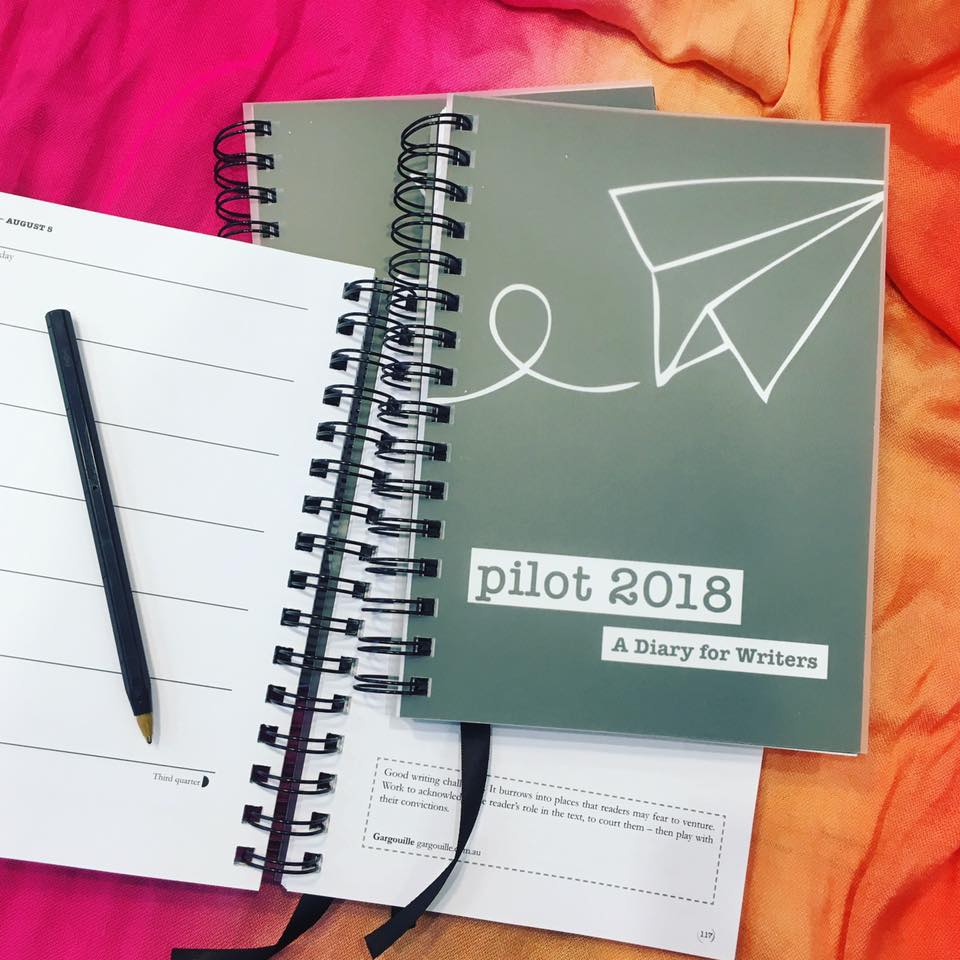
Pilot 2018: A Guide for Writers (2017)


Karen Bateman, ed.: Pilot 2018: A Guide for Writers (2017)


Starting (and Stopping) a Poem

I find it almost impossible to start writing a poem. Some of my friends tell me that they sit down and begin doodling on a piece of paper until a few words start to hang together, and then, before they know it, they have a poem!

It doesn’t work like that for me at all. I have to hear a phrase sounding over and over again in my head. When it really begins to nag at me, I try to write it down.

I once went to a poetry workshop by the South Island poet Brian Turner, where he told us always to try and pursue the poem for a few lines past where we thought it should end, just in case. This advice has served me well.

On the other hand, it’s equally hard to stop writing a poem. Paul Valéry once said, “a poem is never finished; it is only abandoned.” There’s a lot in that. It’s tempting to think that your piece is good to go after you’ve read through it and tweaked it a few times, but I find that it’s best to do so again and again, at intervals of days and weeks and even months, before you can feel reasonably certain it’s giving all it’s got to give.

Above all, be gentle with yourself. If your first draft sounds like illiterate dreck – as mine almost always do – so what? You have to start somewhere, but that somewhere can be a long country mile from the finished product, some hours (or days, or years) down the track. But isn’t that the fun of the thing?


(5/4/17)

Karen Bateman et al., ed. Pilot 2018: A Diary for Writers. Melbourne & South Gippsland: Pilot Press, 2018. 12 [available at: http://www.pilotpress.com.au].

[275 wds]


Friday

Poetry Shelf, Poets' Choice (2016)


[NZ Poetry Shelf]

Paula Green:
Poetry Shelf’s Annual-Books-We-Loved-in -2016 Lists


    Jen Crawford: Koel (2016)


  • Jen Crawford. Koel. Introduction by Divya Victor (Melbourne: Cordite Books, 2016).

  • Jen Crawford’s wonderful new book of poems is my first pick for 2016. Mind you, there’s been nothing simple or straightforward about Jen’s development as a poet – from the fractured narratives of Admissions or Pop Riveter to the post or trans-human thoughtscapes of her latest book. Anything can speak in a Crawford poem: a rock, a bird, a human – but does it choose to? That’s the question. Also, what might it have to say? The world can no longer be divided up neatly into natural and artificial halves in her vision: nor is it any longer talking to us or trying to instil moral lessons. Rather, it is, and the question of what it is (or might be) is a matter of pressing concern to Jen. The Koel is a bird with a particularly loud and raucous call – a little like the dredgers that inhabit the canals, half-amphibious, half-land-creatures, in the Eastern cities where so many of these poems were written in (as she tells us) a hypnagogic state between waking and sleeping. This is a book to read over and over again – to experience in many moods.


  • Christopher Ricks & Jim McCue, ed. The Poems of T. S. Eliot: The Annotated Text. 2 vols (London: Faber, 2015).

  • Ever since I first picked up The Waste Land as a teenager and fell under its spell, I’ve been wondering just how Eliot got there – and what happened to him afterwards. If any of you have similar questions then this rather monstrous version of his complete poetical works will offer you as many answers as there have been commentators on his immense, almost unprecedented eminence over modern English-language poetry. There’s a tidied-up version of the “original” Waste Land here – free of its editing by Ezra Pound. There are notes and drafts and commentaries beyond all reason and proportion. It’s either a treasure trove or a madhouse: it’s hard to decide which. I certainly wouldn’t be without it, though – and while it may not be all that easy to read through, it’s very rewarding to browse in.


    Erin McPhee: Anne Carson's Float (2016)


  • Anne Carson. Float: "A collection of twenty-two chapbooks whose order is unfixed and whose topics are various. Reading can be freefall" (New York: Alfred A. Knopf, 2016).

  • It’s quite funny to see just how mixed is the response on Amazon.com to this, Anne Carson’s latest opus. The fans are fine with it, of course: yet another example of her wide-ranging erudition and versatility of invention. The less whole-hearted complain about the difficulty of actually reading this collection of mini-chapbooks. And, to be honest, the whole thing does resemble the little sets of pamphlets one often gets issued with in offices far more than the kind of arthouse production represented by NOX or Antigonick. One guy actually said he was waiting for the hardback version (I presume there will never be a hardback version?). Needless to say (for anyone who’s ever looked into one of my own books), I’m fine with gimmicky layouts, so I’m really just looking forward to getting to grips with the wide-ranging set of Carsonian idées fixes on offer here.


  • Don W. King, ed. The Collected Poems of C. S Lewis: A Critical Edition (Kent, Ohio: The Kent State University Press, 2015).

  • I don’t quite know why I have such a soft spot for C. S. Lewis’s poetry. I was brought up on the Narnia books, then switched my allegiance to the science fiction trilogy and Till We Have Faces when I got a bit older. But why the poetry? How could the same person who enjoyed the fractured Modernist deathscapes of Eliot and Pound enjoy the simple pieties of C. S. Lewis? I guess because there’s nothing simple about them: from his early attempts to write long narratives in verse, to the wonderfully crafted (albeit somewhat occasional) poems he produced in later life, there’s a definite charm to almost all of his work in this genre. While his First World War poems cannot bear comparison to Owen’s or Rosenberg’s, they do have their own logic and place in his development as one of the most arrestingly visual of Fantasy writers. Some of the early pieces about his love for his birthplace, County Down in Ireland, are also beautiful: quite perfect in their way. Who cares whether a poet can be called “major” or not? Writing a few poems a reader feels compelled to go back to is, to my mind, the only distinction worth having.


(25/11/16)

'Poetry Shelf’s Annual-Books-We-Loved-in -2016 Lists.' Ed. Paula Green.
NZ Poetry Shelf: a poetry page with reviews, interviews, and other things.
[Available at: https://nzpoetryshelf.com/2016/12/05/poetry-shelfs-annual-books-we-loved-in-2016-lists/ (5/12/16)]

[757 wds]


Poetry Box: Paula Green


Thursday

Catching a ride on a paradox (2016)


Keith Nunes: catching a ride on a paradox (2016)


It was apparent to me when I first started to read Keith Nunes' poems - at any rate those first few that crossed my desk as an editor - that there was a freshness and directness to his view of the world which I found immensely appealing. I don't mean to imply that they seemed artless - rather, that they were artful in the best way: concealing their subtleties of craft beneath that effortless vernacular voice Keith can, apparently, summon at will. They were about very real things, too: love, lust, landscape, leisure, longing. Since then he's gone on from strength to strength, but never losing that initial acuity and lack of vainglorious display.


(28/9/16)

Keith Nunes, catching a ride on a paradox: poetry and short fiction (Rotorua, 2016): blurb.

[114 wds]


Friday

Poetry Shelf, Poet’s Choice (2015)


[NZ Poetry Shelf]

Paula Green:
Poetry Shelf, Poet’s Choice: Jack Ross makes a few picks


Jane Summer: Erebus (2015)


First of all, Jane Summer‘s wonderful poetic memoir Erebus, about the death of her friend Kay Barnick on the ill-fated flight in 1979.

I guess New Zealanders tend to think that we own this particular disaster — and of course there’s the precedent of Bill Sewell’s fine book on the subject — but the personal intensity combined with genre-busting inventiveness of this book-length poem completely absorbed me.

Good on Sibling Rivalry Press of Little Rock Arkansas for spending so much time on the design and layout of this book, and thanks to Jane Summer for sending me a review copy (for PNZ). I might never have come across it otherwise.


My other favourite book this year is Olivia Macassey‘s The Burnt Hotel (Titus Books, 2015). It’s been far too long since we’ve heard from her, and this book has many old favourites as well as new ones.

The dreamy, lyric, intensely introspective and yet never self-indulgent truth of Liv’s writing continues to enchant in this new book. And Brett Cross and Ellen Portch’s design work on it is really beautiful. Their Titus poetry volumes are now among the most handsome in the New Zealand poetry canon, I think.


(11/12/15)

'Poetry Shelf, Poetry Picks.' Ed. Paula Green.
NZ Poetry Shelf: a poetry page with reviews, interviews, and other things.
[Available at: http://nzpoetryshelf.com/2015/12/11/poetry-shelf-poets-choice-jack-ross-makes-a-few-picks/ (11/12/15)]

[211 wds]


Paula Green


Thursday

Edmond & Hall, Histories of the Future (2015)


Edmond, Martin, & Maggie Hall. Histories of the Future. Words by Martin Edmond. Images by Maggie Hall. North Hobart, Tasmania: Walleah Press, 2015.


Blurb:
Martin Edmond is the closest thing we have to an Australasian Jorge Luis Borges and this book is a kind of Aleph: a point from which everything in the universe can be seen simultaneously — books, dreams, pictures, memories, bric-a-brac. Every reader will confront here their own frissons of recognition. The photographs, by Maggie Hall, are perfect: sufficiently off on their own tangent to set up a counter-narrative to the prose, but tending round to the same set of atmospheres and obsessions.


(May 8, 2015)

[Available at Walleah Press: http://store.walleahpress.com.au/MARTIN-EDMOND-and-MAGGIE-HALL-Histories-of-the-Future_p_69.html (29/7/15)]

[81 wds]


Monday

August On the Shelf (2014)


[NZ Poetry Shelf

Paula Green:
August On the Shelf: Poetry picks from Siobhan Harvey, Harry Ricketts, Jack Ross, James Norcliffe


Jack Gilbert: Collected Poems (2012)


Jack Ross: First of all, there’s the Collected Poems of Jack Gilbert (New York: Alfred A. Knopf, 2012). I picked this up secondhand and have been reading it with increasing delight and respect ever since. There’s something plain and direct about this guy that really appeals to me. When the book was nominated for the 2013 Pulitzer prize, the citation read: “a half century of poems reflecting a creative author’s commitment to living fully and honestly and to producing straightforward work that illuminates everyday experience with startling clarity,” which I think is quite nicely put. He’s the very opposite of a showboat poet (not that they can’t be fun too, sometimes). He died shortly after the book appeared, so it really is the last word on a lifetime devoted to the craft.


Another book I’ve been reading in this month is the final, complete version of Doc Drumheller’s 10 x (10 + ’10) = 0 (Christchurch: The Republic of Oma Rāpeti Press, 2014). I first met Doc last year, at the Hawke’s Bay Poetry Conference (though we’d been corresponding on and off for years), and found him a very interesting person to talk to. This huge, ten-part poem, compiled over the past decade, consists of a series of poems compiled according to stringent writing restrictions, rather in the mode of an Oulipo project. The tenth and twentieth poem in each volume is a palindrome, reading the same backwards and forwards. Give the popularity of such poets as Christian Bok (Eunoia), it’s nice to know that New Zealand has its own workshop of potential literature humming away down there on the Canterbury Plains (and finding periodic expression in the journal Catalyst, which Drumheller also edits).

Jack Ross teaches at Massey University Albany. He has a poetry book coming out later in the year from HeadworX. It’s called “A Clearer Look at the Hinterland: Poems & Sequences 1981-2014.” Catch up with what he is doing on his blog here.


(31/7/14)

'August On the Shelf: Poetry picks from Siobhan Harvey, Harry Ricketts, Jack Ross, James Norcliffe.' Ed. Paula Green.
NZ Poetry Shelf: a poetry page with reviews, interviews, and other things.
[Available at: http://nzpoetryshelf.com/2014/08/05/august-on-the-shelf-poetry-picks-from-siobhan-harvey-harry-ricketts-jack-ross-james-norcliffe/ (5/8/14)]

[331 wds]


Paula Green


Sunday

Here are the poetry books that hooked us (2013)


[NZ Poetry Shelf

Paula Green:
Here are the poetry books that hooked us in 2013


Al Purdy: Beyond Remembering (2000)


Jack Ross:

Purdy, Al, & Sam Solecki, ed. Beyond Remembering: The Collected Poems of Al Purdy. 2000. Madeira Park, BC, Canada: Harbour Publishing, 2001. I picked it up in Jason Books, and have really enjoyed getting to know this very interesting man Al Purdy. Another Canadian poet said of him: “the Emperor has no clothes” — I disagree. To me he seems like a kind of a strange cross between Raymond Carver and James K. Baxter.


(1/12/13)

'Here are the poetry books that hooked us in 2013.' Ed. Paula Green.
NZ Poetry Shelf: a poetry page with reviews, interviews, and other things.
[Available at: http://nzpoetryshelf.com/2013/12/09/here-are-the-poetry-books-that-hooked-us-in-2013/ (9/12/13)]

[73 wds]


Paula Green


The book that got me started (2012)


[Auckland University Press

Celebrating NZ Book Month:
Jack Ross on 'The book that got me started ...'


Celebrating NZ Book Month, Jack Ross thinks about 'The book that got me started ... ' and tripping across Kathy Acker.

The year: 1987. The place: Edinburgh (‘Athens of the North', according to David Hume and his Enlightenment buddies; ‘Reykjavik of the South', according to Tom Stoppard). I was browsing through the shelves of a little second-hand bookshop called Tills – a fairly common pastime for me as I made my halting way to the university and that horrible PhD thesis which obstinately refused to get written. I saw a fat Picador paperback with the words 'BLOOD AND GUTS IN HIGH SCHOOL, Plus Two' on its spine, and opened it up.

My first response was, I suppose, that this was too good to be true. It was full of dream-maps, Persian language lessons, passages of ranting obscenity ... It just had to be second-rate, beneath serious literary notice – and yet, and yet ...

Reader, I bought it. And so began my love affair with the works of the late lamented Kathy Acker, wildest of wild girls, high priestess of post-feminist haut punk. My thesis did get written in the end, but by that stage it didn’t really matter – the virus had entered my blood. I was doomed for life to be a cut-and-paste deconstructionist, cutting my meat from the exposed entrails of a moribund civilisation – with a crazed Gothic prose-style and a bad case of the Black Tarantula blues.


Born and educated in Auckland, Jack Ross has a PhD in Comparative Literature from Edinburgh University. He teaches New Zealand literature and creative writing at Massey University in Auckland. Ross is the author of numerous novels, short fiction and poetry collections and, with Jan Kemp, is the co-editor of the 'New Zealand Poets in Performance' series published by Auckland University Press.


(13/3/12)

Celebrating NZ Book Month: 'The book that got me started ...'
Auckland University Press. [Available at: AUP: News & Events (13/3/12)]

[217 wds]


AUP


Thursday

Martin Edmond, The Evolution of Mirrors (2008)


lulu.com

The Evolution of Mirrors

By Martin Edmond
Publisher: Otoliths
Copyright: © 2008 Martin Edmond Standard Copyright License
Language: English
Country: Paperback book
Printed: 108 pages, 15.24 cm x 22.86 cm, perfect binding, black and white interior ink
Price: $14.75
Ships in 3-5 business days


Martin Edmond: The Evolution of Mirrors (2008)


Description:
“To dance we need those three original muses: memory, voice, occasion ...” Martin Edmond begins his new book of prose meditations, The Evolution of Mirrors with an account of the evolution of the Muses, the daughters of Memory. As his own memory moves from Ohakune to Alexandria, Sydney to San Francisco, we are invited to look into a series of mirrors trained upon the past. “We remember in order to write but we write to forget,” he quotes himself. At times his lapidary prose echoes Borges, elsewhere he appears to be channelling Pessoa. Whatever he writes, though, he remains one of the true originals of our epoch, a stunningly inventive writer whose prose is as haunting as any poem, whose poetry is as circumstantial as Thucydides. As memory folds into memory, mirror into mirror, something starts to come into focus, some justification for our – perhaps quixotic – belief that “across all versions there is something incontrovertible, a substratum of truth.”


(July 30, 2008)

[Available at Lulu Website: http://www.lulu.com/content/3372034 (30/7/08)]

[203 wds]


Keith Westwater, Tongues of Ash (2011)


Keith Westwater: Tongues of Ash (2011)


There's a no-nonsense specificity about Keith Westwater's poems, a refusal to privilege the smooth over the roughnesses of human experience. He provides a chart of his significant spaces - literally as well as figuratively: the book begins with an annotated map of New Zealand, with Wellington as a special insert - which has room for romantic and family love, weather, landscapes, rocks and history.


(13/4/11)

Keith Westwater, Tongues of Ash (Brisbane: Interactive Press, 2011): back-cover blurb.

[63 wds]


Keith Westwater: Tongues of Ash (2011)