Showing posts with label The Imaginary Museum. Show all posts

Sunday

A Memorial Brass (2021)


brief

Obituary:
A Memorial Brass: i.m. Ted Jenner (1946-2021)


Scott Hamilton: Ted Jenner (2011)


Ted Jenner was a friend of mine. I guess one of the things I appreciated most about Ted was his unfailing cheerfulness and unflappability even when things appeared to be going very, very wrong indeed. Perhaps it was his long years working as a Classics lecturer in Malawi that accustomed him to sudden emergencies, or perhaps it was the hand-to-mouth nature of his life as a writer and teacher in New Zealand, but I never saw him at a loss for a wise and witty thing to say.

I had heard that he was ill, and even in hospital, but I'm sorry to say that the news of his death from cancer in the early hours of Friday morning still came as a shock. He wore his years lightly. He was one of that group of baby-boomer New Zealand poets, all born in 1946, at the close of World War II – Sam Hunt, Bill Manhire, Ian Wedde prominent among them – who've been so influential on our literature.

Much though I always enjoyed chatting to Ted – he was a marvellously learned man, a trained classicist with an expertise in Ancient Greek – I suppose it would be true to say that most of my knowledge of him came through his books. The below is probably not a complete list, but it includes all the titles I myself own:

  1. A Memorial Brass. Eastbourne, Wellington: Hawk Press, 1980.
  2. Dedications. Auckland: Omphalos Press, 1991.
  3. The Love-Songs of Ibykos: 22 Fragments. Images by John Reynolds. Auckland: Holloway Press, 1997.
  4. Sappho Triptych. Auckland: Puriri Press, 2007.
  5. Writers in Residence and Other Captive Fauna. Auckland: Titus Books, 2009.
  6. [Ed.] brief the fortieth (July 2010). Auckland: Titus Books, 2010.
  7. The Gold Leaves (Being an Account and Translation from the Ancient Greek of the 'So-Called' Orphic Tablets). Pokeno: Atuanui Press, 2014.
  8. ‘Complete Gold Leaves: Transcriptions of Sixteen Ancient Greek Gold Lamellae. Compiled with English Translations.’ In Bill Direen, ed. Percutio 10: A Special Issue devoted to two projects by Classicist and poet Edward Jenner. Dunedin: Percutio Publications, 2016.
  9. The Arrow that Missed. Lyttelton: Cold Hub Press, 2017.

Looking back, I seem to have written quite a lot about Ted's work over the years:


I'm not sure that there's any need to repeat all that here. In any case, it’s readily available online. Suffice it to say that for me, Ted Jenner combined the twin virtues of precise, scrupulous scholarship with an equally strong taste for experimental fiction and poetry – not that I think he saw much difference between the two genres – and the way he wrote, there really wasn't.

I recall being quite concerned when I heard that Ted was planning to review my chapbook Papyri: Love poems & fragments from Sappho & elsewhere (2007) for brief 36. Knowing no Greek, I’d adapted my versions from a literal French translation I’d picked up in a second-hand shop. I knew that he himself, adept at ancient Greek, had done his own translations in the beautiful small-press Sappho Triptych.

It came as a huge surprise when he praised my book. I suppose a true scholar has far less need to be picky and pedantic than those with a half-knowledge of the field. In any case, it certainly showed the breadth of his sympathies with unusual takes on the classics!

I’ve borrowed the title for this piece from his first collection, A Memorial Brass, exquisitely printed by Alan Loney at the Hawk Press in 1980. It seems best to conclude with some more of Ted's own words, taken from the title poem in that book:
My dear, they call us bourgeois
But it was essentially

A bourgeois thing to do –
An image of conjugal

Faith – to cross the hands over chest
And breast and stand on

The goblin pups, a monumental
Brass patent

For the bloodstream-fevers.
I remember it was cold

That May with added expense, upkeep
of allotment, and late

Spring blooms falling fierce as
Snow on the gale-lashed

Oats. Very soon a priest mumbled eight
Sacrificia patriarchae nostri

Above us. Commenting now on the
Canon of his mass, I

Like to think it was
Easy in Abraham's time –

Knowledge and fear were deliberate
Then, total, without cover; but

As for us, we lie awake
Until the sleeping's over.
My profoundest condolences to Ted's wife, Vasalua. If he were here I'm sure he could find the perfect words to thank her for making the last years of his life perhaps the happiest of all.

As for me, I'd like to say once more Ave atque vale: Hail and farewell, to one of the finest scholars and poets I've ever known. Perhaps we'll meet again some day, when the sleeping's over.


(8-13/7/21)

brief 57, ed. Olivia Macassey (Pokeno: Titus Books, tba)

[857 wds]


Monday

Vanishing Points (2017)


NZ Poetry Shelf

Paula Green:
Michele Leggott’s glorious new poetry collection: a launch speech and some poems


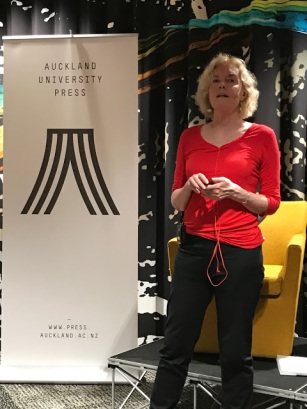
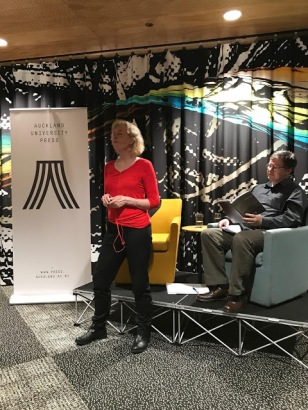
IMG_1043.jpeg  GetFileAttachment-1.jpg


2017 seems to be the year of enviable launch speeches. Gregory O’Brien did a cracking job launching James Brown’s new book; Greg had taken the poems up to Palmerston North to read before writing his speech.

Jack Ross has launched Michele Leggott’s Vanishing Points (Auckland University Press) with similar incandescent word flare. I have read the book twice so far and he is right on point: this is one special poetry collection.


The Speech

Well, needless to say, I felt very flattered when Michele Leggott asked me to launch her latest book of poems, Vanishing Points. Flattered and somewhat terrified. It’s true that I’ve been reading and collecting her work for well over 20 years, and I’ve been teaching it at Massey University for almost a decade now, but I still felt quite a weight of responsibility pressing down on my shoulders!

One thing that Michele’s poetry is not, is simple. It’s hard to take anything in it precisely at face value: what seems like (and is) a beautiful lyrical phrase may be a borrowing from an unsung local poet – a tangle of Latin names can be a reference to an obsolete star-chart with pinpricks for the various constellations.

The first time I reviewed one of her books, as far as I can see, in 1999, I ended by saying “the reading has only begun.” At the time, I suspect I was just looking for a good line to finish on, but there was a truth there I didn’t yet suspect. Certainly, I’ve been reading in that book, and all her others, ever since.

But how should we read this particular book? “Read! Just keep reading. Understanding comes of itself,” was the answer German poet Paul Celan gave to critics who called his work obscure or difficult. With that in mind, I’ve chosen two touchstones from the volume I’m sure you’re all holding in your hands, or (if not) are planning to purchase presently.

The first is a phrase from the American poet Emily Dickinson, referred to in the notes at the back of the book: “If ever you need to say something … tell it slant.” [123] The second is a quote from the great, blind Argentinian writer Jorge Luis Borges: “I made a decision. I said to myself: since I have lost the beloved world of appearances, I must create something else.” [35]

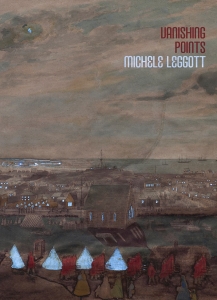
With these two phrases in mind, I’d like you to look at the cover of Michele’s book. It’s a painting of the just-landed Imperial troops, camped near New Plymouth in August 1860. The wonderful thing about it is the way the light of the campfires shines through the painting: little holes cut in the canvas designed to give the illusion of life and movement.

“War feels to me an oblique place,” wrote the reclusive New England poet Emily Dickinson to Thomas Wentworth Higginson in February 1863, at one of the darkest points of the American Civil War. Higginson, a militant Abolitionist, was the Colonel of the 1st South Carolina Volunteers, the first officially authorized black regiment in American history. He was, in short, a very important and admirable man in his own right. Perhaps it’s unfair of posterity to have largely forgotten him except as the recipient of these letters from one of America’s greatest poets.

New Zealand’s Land Wars of the 1860s may have been on a much smaller scale, but they were just as terrifying and devastating for the people of Taranaki – both Māori and Pakeha – in the early 1860s. In her sequence “The Fascicles,” Michele transforms a real distant relative into a poet in the Dickinson tradition. Just as Emily Dickinson left nearly 1800 poems behind her when she died in 1886, many collected in tidy sewn-up booklets or fascicles, so Dorcas (or Dorrie) Carrell “in Lyttelton, daughter of a soldier, wife of a gardener” [75] provides a pretext for “imagining a nineteenth-century woman writing on the outskirts of empire as bitter racial conflict erupts around her.” [123]

There’s an amazing corollary to this attempt to “Tell all the truth but tell it slant” (in Dickinson’s words). Having repurposed one of her family as a war poet, Michele was fortunate enough to discover the traces of a real poet, Emily Harris, the daughter of the Edwin Harris who painted the picture of Taranaki at war on the wall over there, whose collected works so far consist of copious letters and diaries, but also two very interesting poems. “Emily and her Sisters,” the seventh of the sequences collected here, tells certain aspects of that story.

It’s nothing but the strictest truth to say, then (as Michele does at the back of the book), that one should:
walk away from the painting when it is lit up and see how light falls into the world on this side of the picture surface. Is this what the artist meant by his cut-outs? Is this the meaning of every magic lantern slide? [124]
I despair of doing justice to the richness of this new collection of Michele’s – to my mind, her most daring and ambitious work since the NZ Book Award-winning DIA in 1994. There are eight sequences here, with a strong collective focus on the life and love-giving activities which go on alongside what Shakespeare calls in Othello “the big wars”: children, family, eating, painting, swimming. One of my favourites among them is the final sequence, “Figures in the Distance,” which offers a series of insights into the world of Michele’s guide-dog Olive – take a bow, Olive – amongst other family members, many of whom, I’m glad to see, have been able to come along here tonight.

This is a radiant, complex, yet very approachable book. It is, in its own way, I’m quite convinced, a masterpiece. We have a great poet among us. You’d be quite crazy to leave here tonight without a copy of Vanishing Points.

Jack Ross


[Jack and Michele then had a discussion on how the book came into being. I am going to do an interview with Michele so Poetry Shelf readers can also get different entry points into the collection.]


1503612399072.jpg
Michele Leggott, Vanishing Points (Auckland University Press, 2017)


(23/10/17)

Paula Green, “Michele Leggott’s glorious new poetry collection:
a launch speech and some poems.”
NZ Poetry Shelf: a poetry page with reviews, interviews and other things.
[Available at: https://nzpoetryshelf.com/2017/10/30/michele-leggotts-glorious-new-poetry-collection-a-launch-speech-and-some-poems/ (30/10/17)]

[Reprinted from: The Imaginary Museum (26/10/17)]

[992 wds]


Poetry Box: Paula Green


Wednesday

Dreamtigers: i.m. Sarah Broom (2013)


Mark Pirie, ed.: Poetry Archive of New Zealand Aotearoa

Obituary: Sarah Broom

DREAMTIGERS:
I.M. SARAH BROOM


[Sarah Broom (2012)]


My friend Sarah Broom died on Thursday, 18 April 2013, finally losing her long battle with cancer.

It's not that the news was unexpected. Sarah's struggle with the disease had been protracted and courageous, but - though none of us really wanted to admit it - there was never any real prospect of a cure. Month after month, year after year, we received emails telling us of the latest experimental program she was on, the latest series of flights overseas to try one more wonder drug.

As a young mother, Sarah knew that every moment with her children and family was precious. She never faltered or flagged in that duty, tempting though it must have seemed at times just to give up and let go. She never did.


[Contemporary British and Irish Poetry
(Palgrave Macmillan, 2006)]


I first met Sarah about ten years or so ago, when she came to take up a Post-doctoral fellowship at Massey Albany. She'd just finished the PhD research which would eventually become her first book, Contemporary British and Irish Poetry: An Introduction (2006), and I suppose I was one of the few people there who'd even heard of some of the poets she'd been studying. We shared a love of craggy British poet Peter Reading - it was, however, she who converted me to the great and powerful Paul Muldoon.

She left to take up a lectureship in English at Otago University, but gave it up after a year. I must confess that it wasn't till then that I understood that, while literary-critical research was important to her - and she was indeed a very fine critic, as I said in my Poetry New Zealand review of her book - what she wanted above all to be was a published poet in her own right.

I remember her showing me the initial drafts of what would become Tigers at Awhitu (2010), and my slightly ambivalent reaction to it. Her poems seemed - I have to admit it - a bit old-fashioned to me, a bit well-behaved, well-rounded, British. By the time the book eventually appeared, though, it was a very different proposition. Quite a few of those earlier poems remained, but they had been supplemented by a section of poems about her disease - wilder, stranger poems, culminating in the title piece "Tigers at Awhitu":

tiger, why do you hide?

my fur is matted
and mangy, my face
is raw, there's red
under my claws

tiger, have you killed?

no, not for weeks
of stony days
and vagrant nights

tiger, why do you cry?

I cannot say

I think my heart
was left unwatched
and opened,
secretly, rashly,
like a flower in the night

sleep, tiger, sleep
sleep and let it be

tiger hearts can take a lot

of love

[p.66]

Is the tiger cancer? No, nothing as simple and reductionist as that - but it is (perhaps) a symbol of the unpredictable forces of nature: those which smile or frown on us seemingly at whim. The power of the poem lies in its suggestiveness, its unpredictability: "And when I have found enough wildness / I lie down right inside it / and sleep" [p.69].

I saw Sarah last at the Korero exhibition last year. Twenty poets had been matched with twenty artists, each of them taking inspiration from a single poem. The artist Sarah had been paired with chose "Tigers at Awhitu," and - as I recall - produced a very beautiful driftwood sculpture to evoke its magnificent setting at the head of the Manukau Harbour.

We had a nice chat about that; about, also, the great success of her book, both here and in the UK, where it had been published simultaneously by Carcanet Press (characteristically, Sarah asked me if I'd like a copy of the British edition to go with the New Zealand one - she knew that with my bibliographic obsessiveness, I'd like to have both versions on my shelves: and so I do):


[Tigers at Awhitu (Auckland: AUP, 2010)]


[Tigers at Awhitu (Manchester: Carcanet, 2010)]


I remember also, shortly before her collection appeared, when it had been accepted by both publishers, but was still in that limbo that poetry books inhabit before they come bursting out on the scene like phoenixes, I invited Sarah to take part in a poetry reading at Massey Albany.

The reading was for our stage one Creative Writing class (the other readers were Jen Crawford, Thérèse Lloyd, Lee Posna and Michael Steven). Sarah admitted to me that it was her first formal poetry reading, which should give you some idea of how long she'd been waiting for her work to be recognised. She must have got a lot more habituated to poetry readings after that - from 2010 onwards, the name Sarah Broom was on every list of up-and-coming young poets in New Zealand.

I'll never forget what she did on that first occasion, though. She started off by reading Stevie Smith's famous poem ""Not Waving But Drowning", then segued into her own response to the poem, "All my life" (now available on the Tuesday Poem website). It seems somehow terribly apposite now, more even than it did at the time:

and yes he was
drowning, not waving, now we know,
and isn’t it hard to tell?


Sarah Broom - St Lukes, Remuera
(23rd April 2013)


In Memory of
SARAH BROOM (1972-2013)


Wife of Michael

Mother of
Daniel, Christopher & Amelia

Author of
Contemporary British and Irish Poetry: An Introduction (2006)
Tigers at Awhitu (2010)
& (hopefully forthcoming soon):
Gleam (2013)


Rest in peace, Sarah:

sleep, tiger, sleep
sleep and let it be


Dr Jack Ross has published several books of poems, including City of Strange Brunettes (1998), Chantal's Book (2002), To Terezin (2007) & Celanie (2012), as well as three novels, a novella, and two collections of short stories. I've also edited a number of books and literary magazines, including (with Jan Kemp) the trilogy of audio / text anthologies Classic, Contemporary & New NZ Poets in Performance (AUP, 2006-8). I have a Doctorate in Comparative Literature and teach Creative Writing at Massey University's Albany campus.


(19-20/4/13)

Poetry Notes 14 (vol. 4, issue 2). ISSN 1179-7681 (Winter 2013): 6-8.
[Reprinted from: The Imaginary Museum (20/4/13)]

[1004 wds]


Monday

Leicester Kyle: Koroneho (2012)


Scott Hamilton, ed.: brief 44/45 - Oceania (2012)

Leicester Kyle’s Koroneho

Leicester Kyle. Koroneho: Joyful News Out Of The New Found World. Edited with a Introduction by Jack Ross. Preface by Ian St George. ISBN 978-0-9876604-0-4. Auckland: The Leicester Kyle Literary Estate / Wellington: The Colenso Society, 2011. ii + 110 pp.


Leicester Kyle: Koroneho (2011)

Why pink, you ask? It does seem rather a garish shade for the cover of this first posthumous publication by my old friend Leicester Kyle.

Actually the whole thing came about rather serendipitously as the result of a request to republish some of Leicester's (many) poems about orchids by Ian St George, editor of the New Zealand Native Orchid Journal.

David Howard and I told him that, as Leicester's literary executors, we'd be happy to cooperate with such a scheme, but I also mentioned in my reply that - while there were certainly a number of short lyrics describing orchids he'd encountered in the hills around Millerton - his major contribution to the subject was a vast epic poem called Koroneho, an account of the life and work of pioneering printer, missionary and naturalist William Colenso (1811-1899), written in the form of a series of descriptions of 14 native orchids found by the latter in his wanderings around the North Island of New Zealand.

The significance of these orchids, for Leicester, appears to have been that, while Colenso's description of each of them been duly published in the scientific literature at the time, they hadn't been confirmed as separate species by subsequent classifiers.

They were, then, real specimens of phantom plants - a pretty appealing notion to any poet, given that our business is supposed to be the depiction of "imaginary gardens with real toads in them" (Marianne Moore, "Poetry").

In his reply, Ian mentioned:

Perchance I am also editor of eColenso, the newsletter of the Colenso Society. November 17 is the bicentennial of Colenso's birth, and we are having a Colenso Conference in Napier. It would be brilliant to have a few copies of Kyle's Koroneho available at the conference - perhaps a limited edition of 50 copies? I would be happy to arrange the printing.... are you interested?

Was I interested! Just about any plan that could help spread interest in the life and works of Leicester Kyle would interest me, especially one like this, which seemed just to have dropped into my lap out of nowhere.

So anyway, to make a long story short, having just laboriously transcribed the poem from the one surviving typescript, a mass of crumbling yellow pages given by Leicester to his great friend and poetic ally Richard Taylor in the late 1990s, I sent it off as a file-attachment to Ian.

He had a number of interesting comments to make about it:

I think it's an important (at least in NZ) modernist collage long poem in cantos, and I wondered if he had been influenced by William Carlos Williams' Paterson, as well as Ezra Pound.

(This was in response to my comparing it with The Cantos - not to mention Smithyman's Atua Wera - in the introduction I'd written to the poem.)

I had thought to make it a simple paperback in much the style of Colenso's Paihia press publications - even to the pink paper! Thus it would be all monochrome. An alternative would be to have a colour illustration of an orchid - or one of his orchid drawings (mine actually!) from the original, but in a way that detracts from the theme of insubstantial unreality.

Hence the pink cover, you see - hence too the rather offhand style of the production: Ian's encyclopedic knowledge of Colenso enabled him to find a form which seemed to fit so eccentric a piece of Colenso-iana, in a way which would make sense to the other enthusiasts attending the conference.

Another interesting point about the pink came up in a subsequent email, where he mentioned that it matched "the pink blotting paper that Colenso was forced to use when the CMS forgot to send out any printing paper." That was enough for me. Pink it must be.

Ian also mentioned that Leicester had been a bit premature in thinking that all of these particular orchid identifications by Colenso had been rejected. Apparently some of them have been reinstated in the latest listings. In his foreword to the book he enlarges on his belief that "in imagination Kyle WAS Colenso ...

(I suppose all biographers "become" their subjects) - both were botanists, priests, writers - had similar names - and Colenso stands as the kind of kafkaesque figure, sensitive and intelligent, but beset by machiavellian insensitive authority, that we all find it easy to identify with. There are a number of minor inaccuracies in Kyle's biographical bits about Colenso, but they don't matter: as he suggests, "if you want the facts, go to the biographies - this is about the truth".


[William Colenso (c.1880)]


(4/11/11)

brief 44-45 (2012): 206-7.
[Reprinted from: The Imaginary Museum (4/11/11)].

[811 wds]


brief 44/45 (2012)


Wednesday

Johnsons or Shits (2011)


Bill Direen, ed.: brief 42 (May 2011)

Johnsons or Shits

Mike Johson, Travesty. Auckland: Titus Books, 2010.


I've just been reading a very entertaining graphic novel (or series of comics brought to a premature end by lack of commercial success, if you prefer) called Outlaw Nation, by Jamie Delano. It elaborates on a concept of William S. Burroughs, which divides the population of the world into two groups: Johnsons and Shits. A bit of ferreting around on the internet brought up the following definition:

Burroughs first encountered the concept of the Johnson Family while still a boy reading the book You Can’t Win by Jack Black [no relation to the actor - Ed.]. First published in the 1920′s, Black’s autobiographical account of hobo life was immensely popular in its day. Burroughs describes the Johnsons in The Place of Dead Roads:
`The Johnson Family’ was a turn-of-the-century expression to designate good bums and thieves. It was elaborated into a code of conduct. A Johnson honors his obligations. His word is good and he is a good man to do business with. A Johnson minds his own business. He is not a snoopy, self-righteous, trouble-making person. A Johnson will give help when help is needed. He will not stand by while someone is drowning or trapped under a burning car.
In contrast to the honorable world of hobos and criminals, Burroughs describes a type of person known simply as a `Shit.’ Unlike the Johnsons, Shits are obsessed with minding other’s business. They are the town busy body, the preacher, the lawman. Shits are incapable of taking the honorable road of each-to-his-own. Burroughs describes the situation in his essay “My Own Business” thus:
This world would be a pretty easy and pleasant place to live in if everybody could just mind his own business and let others do the same. But a wise old black faggot said to me years ago: `Some people are shits, darling.” I was never able to forget it.

So what about it? Which one are you? A Johnson or a Shit? I came across what seems to me the perfect example of a literary shit the other day whilst idly clicking on links in other people's posts: British Historian Orlando Figes.


Here are some quotes from mini-reviews on Amazon.com of books by various of Figes' rivals:

Description by "Historian" of Molotov's Magic Lantern, by Rachel Polonsky:

"This is the sort of book that makes you wonder why it was ever published … Her writing is so dense and pretentious, itself so tangled in literary allusions, that it is hard to follow or enjoy."

"Historian" described Robert Service's 2008 work Comrades, a world history of communism, as 'rubbish':

"This is an awful book. It is very poorly written and dull to read … it has no insights to make it worth the bother of ploughing through its dreadful prose."

And here's a little piece by the same reviewer about one of Figes's own books:

The Whisperers (2008) was "beautiful and necessary":

"A fascinating book about the interior lives of ordinary Russians … it tells us more about the Soviet system than any other book I know. Beautifully written, it is a rich and deeply moving history, which leaves the reader awed, humbled, yet uplifted … Figes visits their ordeals with enormous compassion, and he brings their history to life with his superb story-telling skills. I hope he writes for ever."

And who was "Historian"? Why, none other than Orlando Figes himself.

Yes, yes, very naughty, I hear you saying, but surely puffing your own books anonymously isn't that mortal a sin? Silly, yes ("I hope he writes for ever"), but hardly criminal. Fair enough. Putting up damning reviews of other people goes a bit further, but it's still not completely beyond the pale.

Attend the sequel, though. Some of Figes' victims began to suspect who'd really written these "anonymous" reviews, and even began to voice their suspicions. Figes immediately instructed his lawyer to threaten them with a libel suit.

When that didn't work (his footprints weren't particularly difficult to trace: "orlando-birkbeck" isn't that cunning an alias for a historian called Orlando who teaches at Birkbeck College, London), he then blamed his wife, barrister Stephanie Palmer, for the whole thing. "I've only just found out about this, this evening," as he said in a statement released through his lawyer a few hours after demanding damages from a prominent newspaper which had printed some information on the matter.

But after a week of questions and increasingly critical headlines, Figes today [23/4/10] revealed that he had been responsible for the comments.

A bit reminiscent of Richard Nixon, really. I didn't do it; well, actually, even though it looks as if I did it, it was actually my wife; well, no, it wasn't my wife, it was me, but I was perfectly justified in doing it; well, no, I did do it, and I wasn't justified in doing it, but it was because I was under a lot of pressure of the time and I'm very sorry so please go away and don't bother me any more ... Man up, Orlando. For a historian of the Stalin era you don't exactly exhibit that good old Mandelstam spirit.

Robert Service, one of the Russian historians defamed by Figes puts it rather succinctly in his quote for the Guardian article I got all these details from in the first place:
I am pleased and mightily relieved that this contaminant slime has been exposed to the light and begun to be scrubbed clean ...

That's what Burroughs means by a shit, I think: a petulant little whinging coward who cries like a baby and begs for mercy when he's found out, all the time sharpening the knife he's longing to plunge into you the moment you turn your back. More like Beria than a full-fledged monster such as Stalin himself ...

What about a Johnson, though?

Funnily enough, that seems to be the main subject of Mike Johnson's novel Travesty, which appeared earlier this year from Titus Books, after what Mike described at the launch as an almost thirty-year gestation period.

Travesty is a very strange book indeed. It includes some (very striking) illustrations by Darren Sheehan, some of which are in strip-cartoon form, but doesn't seem otherwise to conform to the "graphic novel" genre. Why call it a graphic novel, then? Why not simply an illustrated (or even, in a rather more Blakean vein, an "illuminated") novel?

I think part of the answer may lie in the book's lack of a conventional, overt narrative drive. Nobody, I suspect, could help but find the various characters and settings interesting - poor burnt-out glow-addicted Harvey, Drunk Len, the sneaky double-dealing therapist Dr Reingold, and (best of all from my point of view) batty old "people's advocate" Dilly Lilly, trapped in her mountainous accumulation of old toys and teddy-bears.

But what's the point of them? They're all burnt-out, used-up human shadows, recycling old damaged neural pathways in some kind of semi-official holding-pen ("Travesty") threatened by the Lion King and his sinister allies named after old characters from Donald Duck (Chip 'n' Dale, the Beagle Boys, the Gladstone Ganders). And as the fog gradually envelops their clapped-out roach motel, the "rathouse", they're all gradually forced out onto the streets awaiting some wondrous (or horrendous) lolly scramble on the Day of Delights. And it seems that something apocalyptic has indeed been averted in the last couple of chapters, where Harvey gets it together sufficiently to complete the set of equations in his head.

But none of it's clear, exactly. All of it's told as though through a glass, darkly. And while it's hinted that Harvey's otherworldly saviour Hermes may simply have been sent by "Netlife, that vast illegal gambling operation on the blacknet where credits, zings and even souls are waged on how people behave":

Netlife is not above prodding things along when the show gets slow. Push the emotional infant, Harvey, out of his nest. Get cameras on him, take over Mercy's eyes, get the punters punting - build up the tension. .... Big bikkies riding on ever twist and turn. [p.231]

Travesty, then, "was caught up in Netlife in ways it did not understand."

Is Travesty, then, a huge gameshow run by net gamblers who prod it from time to time like children stirring up a big glass-fronted ant's nest? In one sense, yes, but it's not just that. Travesty can't be decoded as simply as The Matrix. Once you get behind the mask, you find the same confusions, the same infinite spectra of possibilities as in (so-called) "real life".

"I should like to live in a very much simpler world," Harvey says [p.196]

As Dr Reingold meditates on the (programmed) flirting propensities of his holographic secretary, as Nisa Michelangelo constructs his exact scale model (except in one respect) of Michelangelo's "David", we begin to see that the thing that holds these various levels of reality (or "virtuality") together is - as in the Christian cosmos of Dante's Divine Comedy - love, that Aristotelean "love that moves the sun and the other stars" (Paradiso, canto xxxiii, last line).

The book concludes with a series of meditations on works of art. Mercy, the holographic secretary, recites Keats's "Ode on a Grecian Urn" to her master Dr Reingold (himself, one presumes, named after the central symbol in Wagner's Ring):

'Beauty is truth, truth beauty' - that is all
Ye know on earth, and all ye need to know.

We leave him contemplating the "her impeccable thighs and the perfection of her smooth backside. Cold pastoral! Pit this against the living, sweating, stinking, bloody flesh whose privilege it is to know pleasure and death in equal measure." [p.238]

Nisa Michelangelo, the (alleged) reincarnation of the "real" Michelangelo, sees the huge erect penis of his redesigned "David" being shot off almost at the moment of its completion. Like any revisionist artist, though, he manages to tell himself that this reversion to the statue's original state is somehow for the best:

Looking at the statue now, he sees there is a kind of truth in the mutilation, the severance; the gunman might have taken aim with an artist's eye. All the upright virtue of the lost member is merely suggested now, not blatantly exposed. The mind may build its own addition where he imposed his; the severance itself speaks in resonances. [p.243]

It's an interesting place to end. The fascination of Travesty has lain all along in the parts rather than the whole. The world Mike Johnson constructs up so painstakingly is contradictory, partial, jerry-built to its very bones. But so's the one we live in.

Dilly Lilly's long crawl through the rat burrows that criss-cross her heap of toys is a kind of narrative tour-de-force which calls to mind some of the more extreme passages in Mervyn Peake's Gormenghast, but the tiny mutant rat she extracts, then nurses on her own blood comes from an even more extreme universe (reminiscent as it is of Philip K. Dick's apocalyptic masterpiece Dr Bloodmoney, or How We Got Along After the War). In his refusal to resolve his warring plotlines, to explain the tie-ins which unite all these various levels, Mike Johnson goes them both one better, though.

The mercy of that all-forgiving narrative plot-doctor, knotting up all the loose ends, is perhaps the last thing we must abandon before opening the doors of perception to see each thing "as it is, infinite."

Travesty, then, is (at any rate in conventional terms) a magnificent wreck of a novel. Make sure you unroll a thread behind you before you venture into its intricacies, though. This is the kind of book that might insist on reading you.


[Mike Johnson: Travesty (2010)]


(4/10/10)

brief 42 (2011): 40-44.
[Reprinted from The Imaginary Museum: http://mairangibay.blogspot.co.nz/2010/10/johnsons-or-shits.html (4/10/10)]

[1959 wds]

brief 42 (2011)


Friday

The Tolkien Industry (2009)


Jeremy Rose, ed.: Scooop Review of Books

The Tolkien Industry


For quite some time now I've been meditating an essay on the literary estate of J. R. R. Tolkien. I don't know if I'll ever actually get round to it, though, so I thought I might just put a few of the highlights into a blog post instead.

There's a story (told by C. S. Lewis's literary executor, the egregious Rev - now Fr. - Walter Hooper) that Tolkien once remarked scoffingly to him that his friend Lewis had published almost twice as many books since his death as he'd managed to put out before it! I'm afraid that story rings a little hollow now. The dozen or so books that appeared before Tolkien's own death in 1973 have long since been dwarfed by the ones that have appeared (and continue to appear) ever since.

You don't believe me? Take a look at these two lists, then tell me if there's anything substantial that I'm missing:


Major works published during Tolkien's lifetime:

  1. Tolkien, J. R. R., & E. V. Gordon, ed. Sir Gawain and the Green Knight. 1925. Oxford: Clarendon Press, 1963.

  2. Tolkien, J. R. R. The Hobbit, or There and Back Again. Illustrated by the Author. 1937. London: George Allen & Unwin, 1975.

  3. Tolkien, J. R. R. Farmer Giles of Ham. Illustrated by Pauline Baynes. 1949. London & Boston: George Allen and Unwin & Houghton and Mifflin, 1973.

  4. Tolkien, J. R. R. The Fellowship of the Ring, Being the First Part of the Lord of the Rings. 1954. London & Boston: George Allen and Unwin & Houghton Mifflin, 1961.

  5. Tolkien, J. R. R. The Two Towers, Being the Second Part of the Lord of the Rings. 1954. London & Boston: George Allen and Unwin & Houghton Mifflin, 1961.

  6. Tolkien, J. R. R. The Return of the King, Being the Third Part of the Lord of the Rings. 1955. London: George Allen & Unwin, 1957.

  7. Tolkien, J. R. R. The Lord of the Rings. 1954, 1954, 1955. Revised 2nd edition. 1966. London: HarperCollins, 2001.

  8. Tolkien, J. R. R. The Adventures of Tom Bombadil and other verses from the Red Book. Illustrated by Pauline Baynes. 1961. London: George Allen & Unwin, 1974.

  9. Tolkien, J. R. R. Tree and Leaf [incorporating the story "Leaf by Niggle" (1947) and the essay "On Fairy-stories" (1939)]. 1964. London: Unwin Books, 1973.

  10. Tolkien, J. R. R. “The Homecoming of Beorhtnoth Beorhthelm’s Son.” In The Tolkien Reader. 1949, 1953, 1962, 1964. Cover illustration by Pauline Baynes. New York: Ballantine Books, 1966.

  11. Tolkien, J. R. R. Smith of Wootton Major. Illustrated by Pauline Baynes. 1967. London: George Allen & Unwin, 1974.

  12. Tolkien, J. R. R., & Donald Swann. The Road Goes Ever On: A Song Cycle. Decorations by J. R. R. Tolkien. 1968. London: George Allen & Unwin Ltd., 1974.


[J. R. R. Tolkien (1892-1973)]

I haven't included any of his prefaces to other people's editions & translations of Old English texts, or his separate periodical publications, but otherwise that should be a reasonably comprehensive list (I've put in details of my own copy of each book after the original date of publication).


Major works published posthumously:

  1. Tolkien, J. R. R., trans. Sir Gawain and the Green Knight; Pearl; Sir Orfeo. Ed. Christopher Tolkien. 1975. London: Unwin Paperbacks, 1981.

  2. Tolkien, J. R. R. The Father Christmas Letters. Ed Baillie Tolkien. 1976. London: Unwin Paperbacks, 1978.

  3. Tolkien, J. R. R. The Silmarillion. Ed. Christopher Tolkien. London: George Allen & Unwin, 1977.

  4. Tolkien, J. R. R. Pictures. Ed. Christopher Tolkien. London: George Allen & Unwin, 1979.

  5. Tolkien, J. R. R. Unfinished Tales of Númenor and Middle-earth. Ed. Christopher Tolkien. 1980. London: George Allen & Unwin, 1981.

  6. Tolkien, J. R. R. Letters. Ed. Humphrey Carpenter & Christopher Tolkien. London: George Allen & Unwin, 1981.

  7. Tolkien, J. R. R. Finn and Hengest: The Fragment and the Episode. Ed. Alan Bliss. London: George Allen & Unwin, 1982.

  8. Tolkien, J. R. R. Mr. Bliss. London: George Allen & Unwin Paperbacks, 1982.

  9. Tolkien, J. R. R. The Monsters and the Critics and Other Essays. Ed. Christopher Tolkien. London: George Allen & Unwin, 1983.

  10. Christopher Tolkien. The History of Middle-earth. 12 vols. London & Boston, 1983-96:
    1. The Book of Lost Tales, Part One. London: George Allen & Unwin, 1983.
    2. The Book of Lost Tales, Part Two. London: George Allen & Unwin, 1984.
    3. The Lays of Beleriand. London: George Allen & Unwin, 1985.
    4. The Shaping of Middle-earth: The Quenta, the Ambarkanta and the Annals together with the earliest ‘Silmarillion’and the first Map. London: Guild Publishing, 1986.
    5. The Lost Road and Other Writings: Language and Legend before ‘The Lord of the Rings’. London: Unwin Hyman, 1987.
    6. The Return of the Shadow: The History of the Lord of the Rings, Part One. London: Unwin Hyman, 1988.
    7. The Treason of Isengard: The History of the Lord of the Rings, Part Two. London: Unwin Hyman, 1989.
    8. The War of the Ring: The History of the Lord of the Rings, Part Three. London: Unwin Hyman, 1990.
    9. Sauron Defeated: The End of the Third Age (The History of the Lord of the Rings, Part Four); The Notion Club Papers and The Drowning of Anadûnê. London: HarperCollins, 1992.
    10. Morgoth’s Ring: The Later Silmarillion, Part One, The Legends of Aman. London: HarperCollins, 1993.
    11. The War of the Jewels: The Later Silmarillion, Part One, The Legends of Beleriand. London: HarperCollins, 1994.
    12. The Peoples of Middle-earth. Boston: Houghton Mifflin, 1996.

  11. Tolkien, J. R. R.. The Annotated Hobbit: The Hobbit, or There and Back Again. 1937. Ed. Douglas A. Anderson. London: Unwin Hyman, 1988.

  12. Tolkien, J. R. R. Tree and Leaf. 1964. Second edition, including the poem ‘Mythopoeia’. Ed. Christopher Tolkien. London: Unwin Paperbacks, 1988.

  13. Tolkien, J. R. R. Bilbo’s Last Song. Illustrated by Pauline Baynes. London: Unwin Hyman, 1990.

  14. Tolkien, J. R. R. Roverandom. Ed. Christina Scull & Wayne G. Hammond. London: HarperCollins, 1995.

  15. Tolkien, J. R. R. Narn I Chîn Húrin: The Tale of the Children of Húrin. Ed. Christopher Tolkien. Illustrated by Alan Lee. London: HarperCollins, 2007.

  16. John D. Rateliff. The History of The Hobbit. 2 vols. London & Boston, 2007:
    1. Part One: Mr. Baggins. 2007. London: HarperCollins, 2008.
    2. Part Two: Return to Bag-End. 2007. London: HarperCollins, 2008.

  17. Tolkien, J. R. R. The Legend of Sigurd and Gudrún. Ed. Christopher Tolkien. London: HarperCollins, 2009.


[J. R. R. Tolkien: The Children of Hurin, ed. Christopher Tolkien (2007)]


Now don't get me wrong. The last thing I want is to be a wowser about what is, in essence, harmless fun. The very fact that I have first editions of most of these books should tell you that I bought them the moment they came out. What's more, I've read them all pretty attentively (with the exception of the last one listed above, which I'm working my way through right now). I am, in short, as big a Tolkienophile as you're likely to find.

That mention of "first editions" brings me to the first part of my gripe, though. By all means get Tolkien's unpublished work out into the public domain, but does it have to be done quite so slowly, and with quite such maniacal academic attention to manuscripts and warring textual traditions? He has been dead for 36 years , after all. Why don't we (yet) have accessible editions of long poems such as "The Lay of Aotrou and Itroun" (1945) or "Imram" (1955), published in periodicals during his lifetime? Why is the (fascinating) “Homecoming of Beorhtnoth Beorhthelm’s Son” relegated to old paperbacks such as the Ballantine (US) Tolkien Reader (1966), or the combined Unwin (UK) reprint of Tree and Leaf & Smith of Wootton Major together with other miscellanea (1975)?

These things take time. I quite see that. And Christopher Tolkien, the main actor in the drama of Tolkien's "posthumous productivity," was himself a teacher of Old English and Old Norse at Oxford before he retired to take on the editing of his father's archives fulltime. It's a positively Victorian tale of filial devotion and of following in one's father's footsteps. Or is it? More on that subject later.

I guess it's the plethora of "second, expanded editions" which really bugs me most. There's now a second, expanded edition [s.e.e. for short] of The Silmarillion (1977 / 1992), an s.e.e. of the Pictures by J. R. R. Tolkien (1979 / transformed into J.R.R.Tolkien: Artist and Illustrator, ed. Wayne G. Hammond & Christina Scull (1995)), an s.e.e. of the Letters (1981 / 2000), an s.e.e. of Tree and Leaf (1964 / 1988) [not to mention a special annotated reprint of all the variant versions of the essay "on Fairy-stories" edited by a couple of American academics (2008)], an s.e.e. of The Annotated Hobbit (ed. Douglas A. Anderson, 1988 / 2002), even - for the love of Mike - an s.e.e. of the infantile (but entertaining) Father Christmas Letters (1976 /2004) ! Not to mention a special facsimile edition of the children's picture book Mr. Bliss (1982 / 2007). What's a poor collector to do? A poor completist collector, that is.

But then maybe collectors don't deserve any special attention. Maybe they ought to be taunted with endless variant versions of the same basic cycle of works. That may very well be. But the trouble is that many of these s.e.e.'s contain vital extra information which greatly influences one's reading of the texts themselves.

Of course it's a traditional publisher's ploy to multiply "revised" and "definitive" editions in this way in order to renew the copyright on works which would otherwise gradually fall away from notice. And in the case of an author with as many die-hard fans as Tolkien, this is clearly a multi-million dollar undertaking. But I can't help feeling that it shows a certain lack of consideration for readers, which is part and parcel of the second section of my complaint.

I suppose I'm also a natural inhabitant of the fantasy world of absurdly complicated and circumstantial annotations and elucidations of essentially frivolous popular texts. Sherlock Holmes is , of course, the classic case. Ever since Fr. Ronald Knox invented what he referred to as the "higher criticism" - writing essays about the Holmes canon which assumed as a basic convention the actual existence of its central characters, and the subordinate role of Arthur Conan Doyle as Dr. Watson's literary agent - a great many people have found a good deal of entertainment in exploring such dilemmas as the "two (or three) Watsons" problem (originating from the fact that Watson's first name seems to shift from John H. to James Watson as the canon unfolds).

Perhaps (as someone else suggested) the latter name was Mrs Watson's pet-name version of "Hamish," one of the possible candidates for the good doctor's middle name ... But then there's the question of how many wives Dr. Watson actually had? Or the heraldry and antecedents of the name "Holmes"? Or exactly which continents are included in Watson's boast of "an experience of women which extends over many nations and three separate continents" ...? You get the general idea. The Bible of these maniacal speculators is the monumental Annotated Sherlock Holmes (arranged in an eccentric "chronological order" of his own devising) of the late lamented William S. Baring Gould (1967).

Now Holmesian (UK) - or "Sherlockian" (US) - "higher criticism" is an essentially tongue-in-cheek affair, conducted by learned, but frivolous-minded sages such as Christopher Morley, Dorothy L. Sayers and Vincent Starrett (for more, far more, see the wikipedia article on Holmesian speculation). The original impulse was, presumably, to parody the ponderous Germanic Biblical criticism of the nineteenth century, with its love of multiple authors, contaminated textual traditions, and teasing remnants of ancient solar myths behind the superficial trapperies of the Yahweh cult.

Tolkien criticism has, it seems to me, taken another, darker path. The fact that Tolkien was himself a professor of Anglo-Saxon, and loved to mix in elements (particularly linguistic ones) from his professional field, has led to a mass of learned (and pseudo-learned) commentary on the intricate relationships between the two.

So far so good. Old English scholars such as Tom Shippey, in his excellent The Road to Middle-Earth (1982) and subsequent related works, has illuminated Tolkien's practice in this respect with a certain restrained aplomb.

But when it comes to treating Tolkien's own works as a kind of holy writ, requiring endless revision and recasting to fit ever more recondite revelations about the topography and chronology of his imagined Dreamland, I fear that the same could not be claimed of compilations such as Christopher Tolkien's monumental (and monumentally frustrating) 12-volume History of Middle-earth (1983-96). Here all proportion has been lost. Speculations worthy of the fantasy-world of Sherlock Holmesian higher criticism are woven into the actual detail of the evolution of a group of revoltingly-cloying Edwardian fairy tales (The Book of Lost Tales) into the ever-vaster heroic canvas of the unfinished (and unfinishable?) Silmarillion, issued in a clipped and stilted version shortly after its author's death by Christopher himself.

Christopher's own saga, developing in his father's image from a downtrodden and disillusioned soldier in World War II (his father, a veteran of the trenches of the First World War, claimed in a letter that he might best regard himself as a "hobbit among the Uruk-hai"), to a professional scholar in his father's own discipline of Germanic philology, to an accomplished translator (the Saga of King Heidrek the Wise (1960): a work of deep erudition and poetic value in its own right), to a fierce guardian of his father's literary legacy (and an influential critic of Peter jackson's films), deserves retelling on a larger scale sometime. He is clearly a man of great talent, and considerable scholarly expertise. I would say that his work on editing the manuscript versions of The Lord of the Rings (in particular) might be thought to justify that immense 12-volume history by itself. It's certainly (by far) the most interesting section to read. But it does constitute only three and a bit volumes of the whole tottering edifice.

His most noticeable legacy, unfortunately, seems to be a ragtag and bobtail (to use a Tolkienian term) of mostly American scholars who specialise in ever more recondite and fatuous explorations of the implications of the papers and manuscripts which Tolkien himself sold them so long ago. Is a two-volume History of the Hobbit really necessary, for instance? Especially on top of Douglas A. Anderson's magnificently-illustrated (and basically light-hearted) Annotated Hobbit of 1988 [s.e.e. 2002]?

[John D. Rateliff: The History of the Hobbit (2007)]

The History of the Hobbit is fun to read, mind you. I enjoyed it greatly. But it's not as much fun as it should be. Because it's 900 pages long. Because it's immensely repetitive and overly detailed on points of no consequence. Because its author, John D. Rateliff, has no sense of proportion. Because its publishers know that anything with Tolkien's name on the spine will sell in gazillions (take the recent reprint of parts of Unfinished tales under the stand-alone title of The Tale of the Children of Húrin, for instance). Rateliff, alas, is no Christopher Tolkien.

In summary, then, I think the Tolkien industry began pretty well, with solid editions of his principal unpublished works, and handsome new reprints of the others. Right now, though, it threatens to be swallowed up by its own insane momentum, a victim of its own success. The Holmesian "higher criticism", too, had its rise and fall. There have been few worthy successors to such masterworks as Starrett's The Private Life of Sherlock Holmes (1933), or Baring Gould's Sherlock Holmes of Baker Street: A Life of the World's First Consulting Detective (1962) or even such jeux d'esprits as Nicholas Meyer's The Seven Percent Solution (1974).

Why do we no longer see works of the calibre of Barbara Strachey's delightful Journeys of Frodo: An Atlas of J. R. R. Tolkien’s The Lord of the Rings (1981), or Karen Fonstadt's Atlas of Middle-earth (1981 / s.e.e. 2001), in the (potentially) far less circumscribed (one would have thought) field of Tolkienian "higher criticism"? There are certainly exceptions. John Garth's Tolkien and the Great War: The Threshold of Middle-earth (2003) was a valuable successor to Humphrey Carpenter's 1977 biography and its even more interesting sequel The Inklings: C. S. Lewis, J. R. R. Tolkien, Charles Williams and Their Friends (1978). For the most part, though, what we tend to see now are compendiums of essays by ghastly Academic second-raters, dictionaries and grammars of Tolkien's various made-up languages, and other ever more po-faced and dreary reponses to the simple delights of Tolkien's Hobbit and Lord of the Rings.

I remember my PhD supervisor at Edinburgh, Mr. Colin Manlove, author of a number of critical books on Modern Fantasy, remarking of the appearance of yet another volume of posthumous gleanings in the (then) seemingly-interminable History of Middle-earth, that he was beginning to wonder if they were coming through from spirit messages. At the time I suspected he was just too lazy to read any of them, but as the years go by and the works keep on mounting up, I begin to wonder if he didn't have a point.

This is, I have to say, starting to resemble more and more a publisher's production-line (the shady kind who commission obscure hacks to produce works "in the manner of" V. C. Andrews or Alistair Maclean) rather than a bona-fide attempt to do justice to J. R. R. Tolkien's admittedly impressive literary productivity.

I'm reminded of some remarks made by the young Henry James, in an 1872 review of a volume of Nathaniel Hawthorne's French and Italian Note-Books, edited by his own son (and literary executor) Julian:

Mr. Hawthorne is having a posthumous productivity almost as active as that of his lifetime. Six volumes have been compounded from his private journals, an unfinished romance is doing duty as a “serial,” and a number of his letters, with other personal memorials, have been given to the world. These liberal excisions from the privacy of so reserved and shade-seeking a genius suggest forcibly the general question of the proper limits of curiosity as to that passive personality of an artist of which the elements are scattered in portfolios and table-drawers. It is becoming very plain, however, that whatever the proper limits may be, the actual limits will be fixed only by a total exhaustion of matter.

[Henry James, Literary Criticism: Essays on Literature, American Writers, English Writers, ed. Leon Edel and Mark Wilson (New York: The Library of America, 1984) 307.]

With a few minor variations, the same passage might serve equally well to characterise the even more impressive “posthumous productivity” of the almost-comparably "reserved and shade-seeking genius" J. R. R. Tolkien.

James, characteristically, saw the issue as centring on the proper limits of curiosity about the private life of an artist - a theme treated in more depth in stories such as “The Aspern Papers” (1888) or "The Private Life" (1891). As he went on to remark, the principal result of Hawthorne's executor's filial labours has been that “critics, psychologists, and gossip-mongers” have been left free to “glean amid the stubble.” Is that what Hawthorne (or Tolkien) would really have wanted? Almost certainly not.

Many of his contemporaries were deeply shocked to read what the comparatively short-lived Hawthorne had had to say about them in what he must have regarded as the safe repository of his private journal. The revelations in Tolkien's papers are not of so scandalous an order, but there can be little doubt that many reams of indifferent verse would have been consigned to the fire if he'd known they'd eventually be coming out in immense annotated editions, with their imperfections made glaringly and cringe-makingly apparent.

What's certain is that, "whatever the proper limits may be, the actual limits will be fixed only by a total exhaustion of matter." Not even the death of Christopher can halt it now. His father's legacy has long since fallen into the burning cancerous hands of the Adversary [the professional Anglo-American Academic establishment], and from that dark Mordor there is, I fear, no escape.

All we can do (I suppose) is welcome any light that has been cast on the works written in his lifetime, and try and draw a decent veil over any that should really never have seen the light of day.


Jack Ross teaches English Literature at the Albany branch of Massey University. He is one of New Zealand’s leading literary critics, as well as a poet, novelist, short story writer and translator. Visit his blog at http://mairangibay.blogspot.com.


(24/5/09)


Scoop Review of Books (16/6/09)
[Reprinted from: The Imaginary Museum (24/5/09)]

[3661 wds]